Where Can I Buy Diamond Plate Sheets
Aug-28-2026
If you are asking, "where can I buy diamond plate sheets?", the right answer depends on more than location. A dependable supplier should offer the correct alloy, temper, thickness, pattern height, finish, and sheet size for your fabrication or end-use requirements. Diamond plate, also known as aluminum tread plate, checker plate, or five-bar plate, is valued for its raised pattern, light weight, corrosion resistance, and clean industrial appearance.
From my experience working with aluminum sheet buyers, the most common purchasing mistake is choosing a sheet based only on the lowest quoted price. A low price can hide a thinner base gauge, uneven tread pattern, poor flatness, recycled-material inconsistency, or inadequate surface protection. For trailer flooring, marine equipment, truck bodies, stairs, toolboxes, and decorative panels, those details have a direct effect on service life and fabrication efficiency.
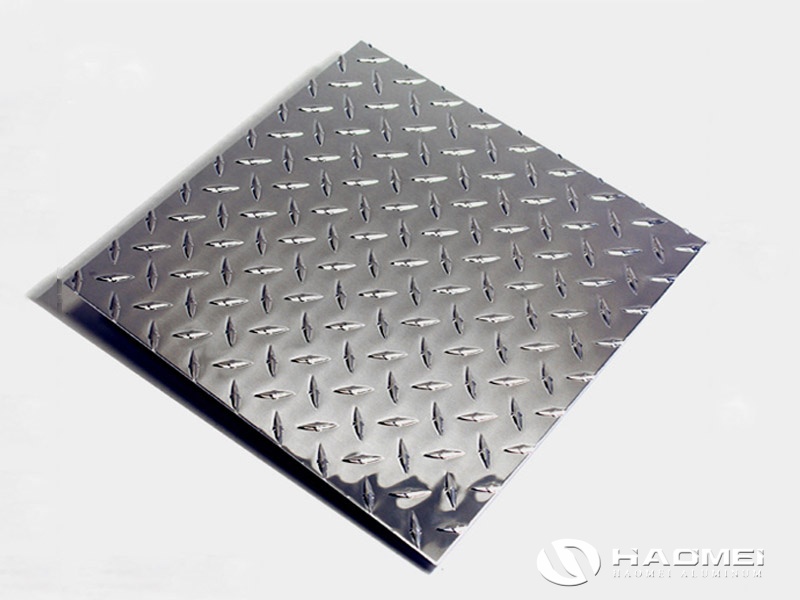
Diamond plate sheets are available through local metal service centers, hardware retailers, trailer-parts distributors, fabrication suppliers, and direct aluminum manufacturers. Each channel has a different advantage:
Local metal suppliers are practical when you need small quantities quickly, want to inspect the material, or require cutting service.
Hardware and retail stores can be useful for small repair projects, although alloy selection, available thicknesses, and finish options are usually limited.
Online metal distributors are suitable for standard-size sheets and repeat purchases, particularly when clear specifications and shipping protection are provided.
Direct aluminum mills or specialized exporters are typically the best choice for container orders, custom dimensions, coils, coated products, or consistent supply programs.
For buyers who need standardized stock or project-specific production, our diamond plate sheet range can be supplied in common sizes, custom widths, cut lengths, and finishes. Direct sourcing is especially valuable when appearance consistency and dimensional tolerances matter across multiple sheets or production batches.
The alloy is the foundation of diamond plate performance. Although several aluminum grades can be embossed, 3003 and 5052 are the most widely specified alloys in the market.
| Alloy | Main Characteristics | Recommended Applications |
|---|---|---|
| 3003 | Good formability, good corrosion resistance, economical, moderate strength | Toolboxes, interior panels, decorative surfaces, trailer trim |
| 5052 | Higher strength, excellent corrosion resistance, better marine durability | Truck floors, boat decks, industrial walkways, marine equipment |
| 6061 | High strength and machinability, but less common in tread plate | Structural components where strength is prioritized |
3003 is often the most cost-effective option for general-purpose diamond plate sheets. It contains manganese, which improves strength compared with pure aluminum while maintaining good forming performance. It is widely used for decorative cladding, storage boxes, wall protection, light-duty flooring, and vehicle trim.
I generally recommend 3003 when the material will be bent, shaped, or used in a non-structural environment. It offers an excellent balance of price, workability, and corrosion resistance. For dry applications and cosmetic projects, it is often the most sensible purchasing decision.
5052 contains magnesium and provides noticeably higher strength than 3003. Its corrosion resistance is excellent, particularly in wet, coastal, and marine environments. It is a preferred choice for truck platforms, loading areas, boat flooring, access ramps, industrial flooring, and equipment guards.
When customers ask whether upgrading from 3003 to 5052 is worth the cost, I look first at the application. If the sheet will face saltwater, frequent moisture, heavy foot traffic, vibration, or impact, 5052 is usually the safer long-term choice. The initial price may be higher, but reduced replacement and maintenance costs often justify the investment.
Aluminum temper describes the material's hardness and work-hardening condition. For diamond plate, commonly available tempers include H22, H24, and H32.
| Temper | Relative Hardness | Typical Use |
|---|---|---|
| H22 | Lightly strain-hardened | Applications requiring easier forming |
| H24 | Moderately strain-hardened | General-purpose tread plate and fabrication |
| H32 | Higher strength with good workability | Heavy-duty flooring, transportation, marine use |
H22 and H24 tempers are frequently selected for 3003 diamond plate because they provide enough rigidity while remaining workable for bending and fabrication. For 5052 material, H32 is popular because it delivers a stronger sheet without becoming excessively difficult to process.
A key point from practical purchasing experience: do not assume that a harder temper is always better. A high-hardness sheet may be excellent for a floor panel but less suitable for deep bends or complex forming. Confirm the fabrication method before finalizing the temper.
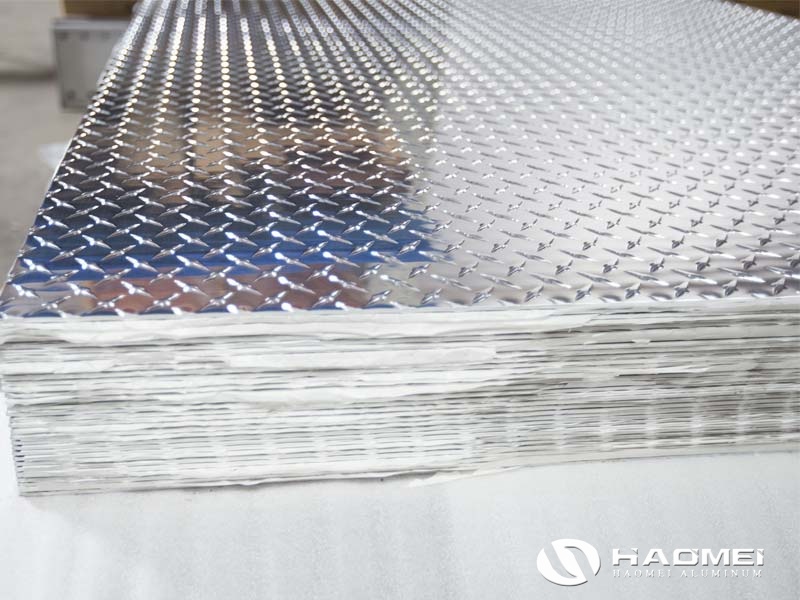
Aluminum diamond plate is recognized for its functional raised pattern, usually with one-bar, two-bar, three-bar, or five-bar designs. The diamond pattern improves traction and helps conceal scratches, dirt, and minor dents better than smooth sheet.
Its main properties include:
Low weight: Aluminum is much lighter than steel, making it ideal for trailers, vehicles, mobile equipment, and transportation applications.
Corrosion resistance: A natural oxide layer protects the aluminum surface, while 5052 offers enhanced resistance in humid and saltwater conditions.
Slip resistance: Raised treads improve footing in many working environments, although surface contamination such as oil, ice, or mud should still be managed.
Attractive appearance: Bright, mill finish, polished, anodized, painted, and black-coated options allow the material to serve both functional and decorative purposes.
Easy fabrication: Aluminum diamond plate can be cut, drilled, welded, riveted, and formed with appropriate equipment and procedures.
For projects that demand a brighter visual effect, polished or mirror-finish products are popular. However, I advise customers to evaluate the real service environment. A polished sheet looks impressive on showroom displays, toolboxes, and custom vehicles, but a mill-finish or coated sheet may be more practical for high-contact industrial areas.
Common diamond plate thicknesses include 0.045 inch, 0.063 inch, 0.080 inch, 0.100 inch, 0.125 inch, 0.188 inch, and 0.250 inch. Thickness should be selected according to span, support structure, expected load, and intended use. Keep in mind that quoted thickness may refer to the base metal thickness rather than the total thickness including the raised tread pattern.
Typical sheet dimensions include 4 x 8 feet, 4 x 10 feet, and 5 x 10 feet, while custom widths and lengths are available for production orders. A 4x8 aluminum diamond plate sheet remains one of the most requested formats because it is easy to transport, cut, and integrate into trailer, wall, flooring, and fabrication projects.
Before purchasing, ask the supplier to confirm:
Alloy and temper.
Base thickness and tread height.
Width and length tolerances.
Pattern type and direction.
Surface finish and protective film requirements.
Actual sheet weight.
Packing method for transit protection.
Material certificates or inspection documentation, when required.
Diamond plate sheets are used across transportation, construction, marine, manufacturing, and architectural sectors. Typical applications include truck bed liners, trailer floors, loading ramps, boat decks, stair treads, work platforms, wall guards, kick plates, toolboxes, fuel tank covers, machinery enclosures, and retail displays.
For heavy-duty applications, the raised tread should not be treated as a substitute for structural engineering. The load-bearing capacity depends on base thickness, alloy strength, support spacing, fastening method, and the direction of applied load. In my view, this is where professional sourcing adds value: the material must fit the design, rather than forcing the design to fit the available stock.
When reviewing quotations, compare delivered value rather than only price per sheet. Confirm whether the offer includes cutting, PVC film, export-grade packaging, certificates, freight, and insurance. For imported material, shipment timing and packaging are particularly important because damaged edges or rubbed surfaces can create costly downstream rejection.
A reliable diamond plate supplier should also be able to explain the difference between 3003 and 5052, recommend a suitable temper, provide tolerance information, and offer consistent material across repeat orders. Clear communication at the quotation stage is often the best indicator of whether a supplier understands the aluminum industry and your actual requirements.
Whether you need a few sheets for a workshop project or a regular supply for trailers and industrial fabrication, selecting the appropriate alloy, temper, thickness, and finish will give you a diamond plate sheet that performs well long after the purchase date.