Thick Diamond Plate
Jul-29-2026
Thick diamond plate remains a practical material choice wherever equipment, cargo, personnel, and weather place continuous demands on a surface. Its raised diamond pattern improves grip while the aluminum base keeps structures lighter than comparable steel alternatives. From truck bodies and utility trailers to marine walkways and industrial platforms, thick diamond plate provides a balance of durability, corrosion resistance, and straightforward fabrication.
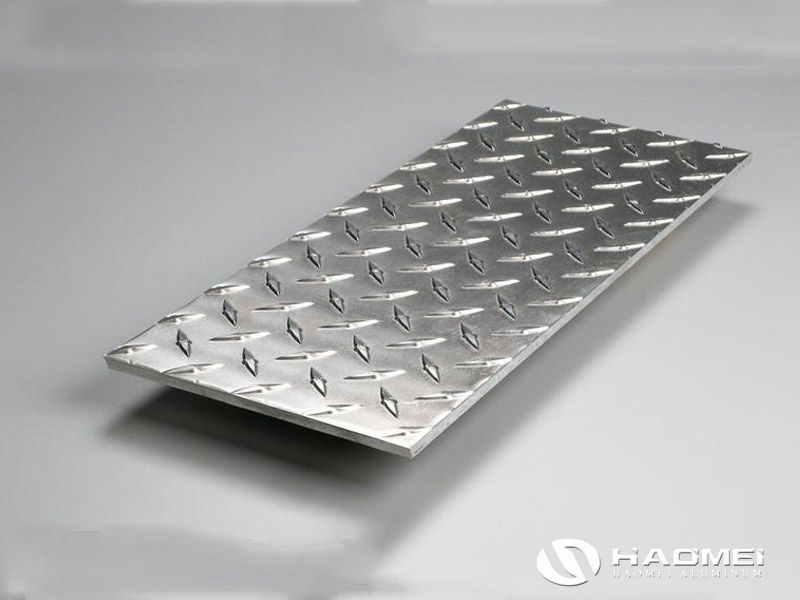
For buyers evaluating heavy-duty tread materials, thickness is more than a number on a purchase order. It affects panel stiffness, dent resistance, fastening performance, and the ability to bridge supports without visible deflection. A properly specified thick diamond plate can help fabricators reduce reinforcement requirements while retaining a clean, functional finish.
Not all aluminum tread plate behaves the same under load. Common selections include 3003 for general-purpose forming and corrosion resistance, 5052 for improved strength in marine and transportation environments, and 6061 where higher structural performance is required. The most suitable alloy depends on whether the plate will be bent, welded, exposed to salt spray, or used as a rigid deck panel.
A relevant industry detail is that aluminum-alloy rolled tread plate is commonly specified under ASTM B632/B632M. This standard addresses material requirements for rolled tread plate and gives procurement teams a useful baseline when comparing products from different sources. It is particularly valuable for projects that need consistent thickness, pattern quality, and mechanical properties across repeat orders.
Our production approach focuses on stable rolling practice, controlled pattern embossing, and inspection of surface uniformity before shipment. These details matter because uneven raised patterns can affect appearance, drainage, and traction consistency. Plate flatness also becomes increasingly important as thickness rises, especially for CNC cutting, trailer-floor installation, and fabricated enclosures.
When ordering thick diamond plate, purchasers should clarify whether the requested gauge refers to base-metal thickness or the overall thickness including the raised tread pattern. This distinction can influence fit-up, weight calculations, and finished assembly dimensions.
For example, a thick aluminum diamond plate specified for a vehicle deck must match the support spacing, load profile, and fastening method. The raised diamonds add surface grip, but the base thickness carries most of the structural load. Engineering teams should therefore review load paths rather than selecting material only by its visual weight or appearance.
For applications requiring conventional sheets, coils, and customized dimensions, our aluminum diamond plate range can be matched to alloy, temper, finish, and cutting requirements. This helps buyers align material selection with their downstream processes instead of adapting their process to an unsuitable stock size.
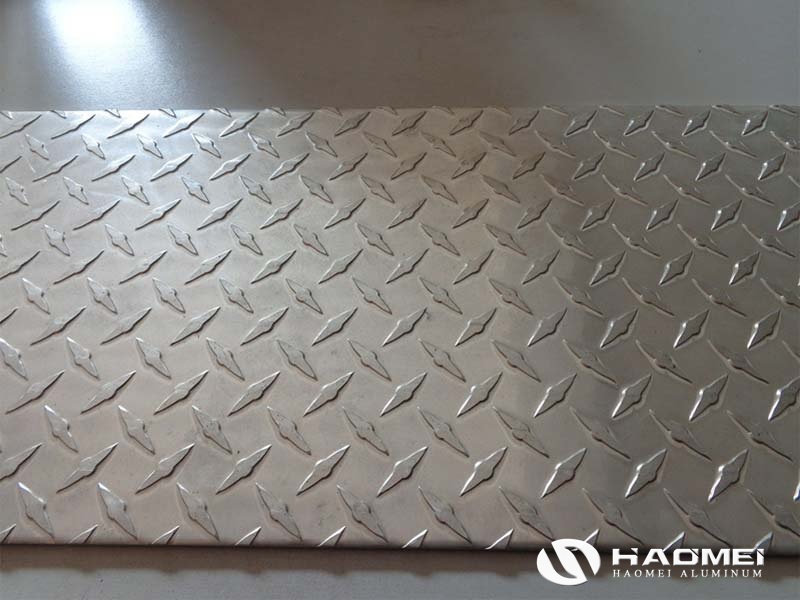
Thick diamond plate is widely used in transport equipment because aluminum offers a favorable strength-to-weight ratio. Common applications include trailer floors, pickup-truck bed protection, fire and rescue vehicle compartments, toolboxes, loading ramps, and step treads. Lower vehicle mass can support payload planning and improve handling compared with heavier steel-based alternatives.
In industrial settings, thick diamond plate is used for machine guards, maintenance platforms, stair landings, dock equipment, and access covers. The embossed pattern provides directional traction that can be useful where moisture, oil, or dust may be present. For exterior infrastructure and marine installations, corrosion-resistant aluminum alloys are especially beneficial because they do not form red rust in the way carbon steel does.
Another important use is architectural protection. Wall panels, corner guards, kick plates, and decorative cladding use the diamond pattern to create a robust visual identity while protecting high-contact surfaces. Mill finish is often preferred for practical installations, while polished or coated options can support branded vehicle bodies, retail interiors, and custom equipment.
International customers often need more than material supply. They require dependable dimensions, clear labeling, secure packaging, and documentation that supports import inspection. Thick diamond plate is typically supplied in standard sheet sizes such as 4 x 8 feet, as well as cut-to-length formats for container optimization and reduced fabrication waste.
Our export handling prioritizes edge protection, moisture-conscious packing, and traceable marking by alloy and specification. This attention is useful for distributors, trailer builders, and project contractors managing material across multiple job sites. With accurate specifications and consistent processing, thick diamond plate becomes a dependable component in safer, lighter, and longer-lasting working environments.