Diamond Plate Price Per Square Foot
Aug-04-2026
The diamond plate price per square foot is a practical benchmark for fabricators, distributors, trailer builders, and end users comparing aluminum tread plate quotations. While a square-foot price makes different sheet sizes easier to evaluate, it should never be treated as a standalone purchasing criterion. Alloy, thickness, tread pattern, surface finish, processing requirements, order volume, and delivered freight all influence the real landed cost.
For international buyers, understanding the diamond plate price per square foot helps prevent a common sourcing mistake: comparing a low ex-works rate with a more complete quotation that includes protective film, export packing, inspection, and container loading. A technically equivalent product with reliable documentation and stable dimensions often produces lower total project cost.
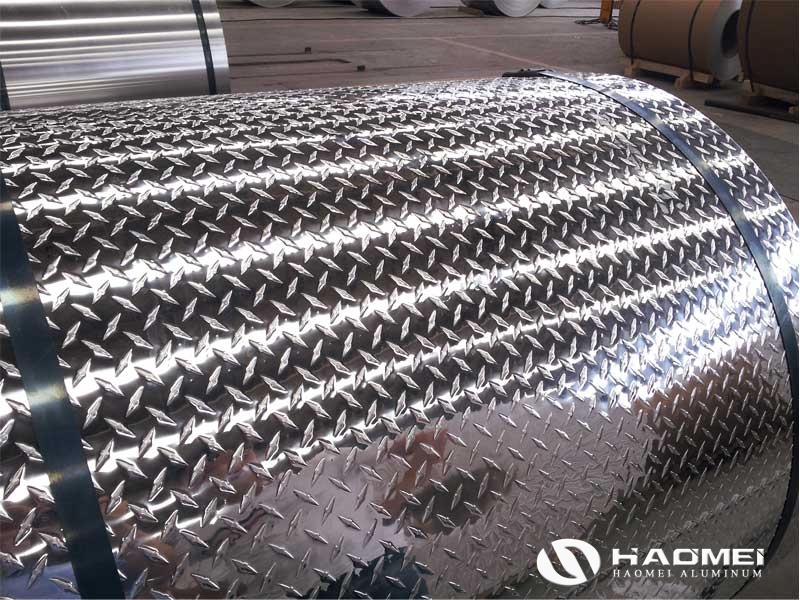
The most important driver of diamond plate price per square foot is aluminum weight. A thicker plate consumes more metal per square foot, so thickness usually has a greater effect on price than the visual tread pattern. Aluminum market movements also affect quotations because primary aluminum is the base material for most 3003 and 5052 tread plates.
Key cost variables include:
Alloy grade: 3003 aluminum diamond plate is widely used for general-purpose flooring, decorative panels, toolboxes, and vehicle interiors. 5052 offers higher corrosion resistance and better strength for marine, transportation, and industrial environments.
Thickness: Common options include 0.045 inch, 0.063 inch, 0.080 inch, 0.100 inch, 0.125 inch, and 0.250 inch. Buyers should confirm whether the stated thickness refers to the base metal or the total thickness including raised tread.
Temper and mechanical properties: H22, H24, and H32 tempers may have different forming behavior and strength levels.
Finish: Mill finish is usually the most economical. Bright polished, mirror, painted, anodized, and color-coated surfaces add processing cost.
Pattern geometry: Standard five-bar and diamond tread patterns can have different rolling availability, tooling requirements, and market preferences.
Order quantity: Full-coil and container-volume orders usually generate a more competitive diamond plate price per square foot than cut-sheet orders.
A reliable diamond plate price per square foot comparison begins with matching the same alloy, temper, thickness, finish, and sheet dimensions. Comparing a 3003-H22 mill-finish plate with a 5052-H32 polished plate is not a like-for-like exercise, even if both are sold as diamond plate.
As a general market principle, thinner sheets have a lower material cost per square foot but may carry a higher conversion cost per kilogram because handling, slitting, cut-to-length, packaging, and administration are spread across less metal. Heavy-gauge tread plate has a higher square-foot cost, yet its conversion cost per unit weight can be more efficient in high-volume production.
For example, light-gauge material may suit wall protection, decorative trims, cabinet liners, and non-structural panels. Medium gauges are commonly selected for truck boxes, ramps, trailer components, walkways, and workshop flooring. Heavy plates are more suitable for high-traffic industrial platforms where deflection resistance and load-bearing performance matter.
When requesting a quotation, clarify whether the diamond plate price per square foot is based on actual sheet coverage or nominal sheet dimensions. A 4 x 8 foot sheet provides 32 square feet of nominal area, but usable area may be lower after trimming, cutting, or fabrication losses.
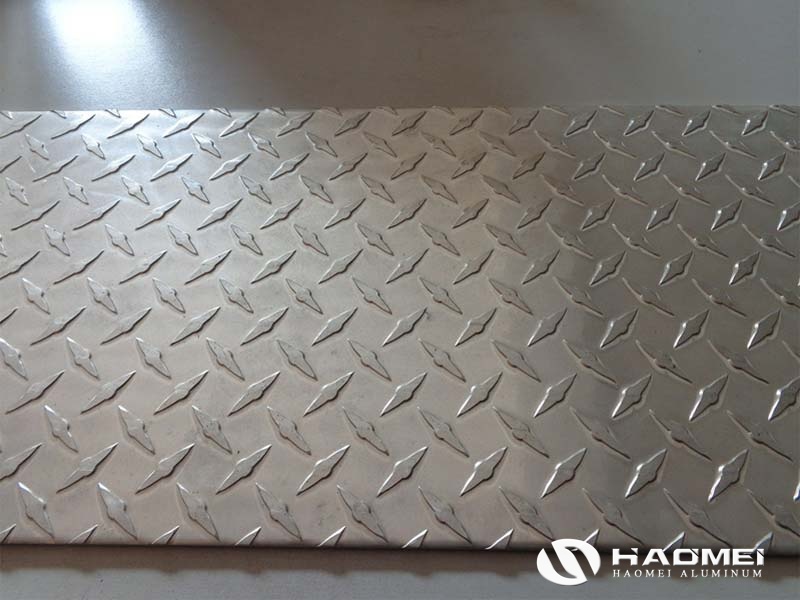
Buyers can estimate the diamond plate price per square foot using material density and thickness. Aluminum density is approximately 0.0975 lb/in³, although the raised tread pattern adds some weight beyond the flat base gauge.
A simplified calculation is:
Price per square foot = Weight per square foot × Price per pound + Processing and packing cost
For metric purchasing, the same logic applies:
Price per square foot = Weight per square foot × Price per kilogram + Conversion cost
To estimate weight, convert thickness into inches and multiply by 144 square inches per square foot and aluminum density. The result should be treated as an approximation because tread height, alloy chemistry, thickness tolerances, and actual rolling practice affect final sheet weight.
For purchasing accuracy, ask the supplier for theoretical weight, actual weighbridge or packing-list weight, and thickness tolerance. This is particularly important when comparing the diamond plate price per square foot of thin embossed sheets, where small deviations can influence the total delivered value across large quantities.
Finish selection can significantly change the diamond plate price per square foot. Mill finish remains a sensible choice where appearance is secondary and the material will be painted, bonded, or used in concealed applications. It provides good utility at a controlled cost and is often preferred for industrial floors, transport equipment, and fabrication stock.
Bright polished and mirror finishes are popular in decorative vehicle accessories, retail displays, interior fittings, and architectural applications. However, these finishes require higher-quality base coil, more controlled rolling, and careful protective-film application. The additional processing and packaging should be visible in the quote rather than hidden in a vague surcharge.
Coated and black tread plate products also require buyers to review coating type, coating thickness, adhesion, color consistency, UV resistance, and scratch protection. A lower diamond plate price per square foot may not represent better value if the coating has inadequate performance for outdoor use or frequent cleaning.
A professional comparison should evaluate the diamond plate price per square foot alongside technical compliance and commercial terms. Request a specification sheet listing alloy, temper, base thickness, tread height, width, length, finish, tolerances, and applicable standards. For export projects, confirm whether the supplier can provide mill test certificates, packing photos, weight lists, and third-party inspection support when needed.
Buyers sourcing standard sheets may review available diamond plate sheet options to compare gauge and finish combinations. For projects requiring standard North American dimensions, 4x8 aluminum diamond plate is often quoted as a complete sheet and then converted into a square-foot equivalent for budget planning.
Other quote items to verify include:
Whether the diamond plate price per square foot is EXW, FOB, CFR, CIF, DDP, or delivered local price.
Whether export seaworthy packing, pallets, corner protection, and moisture barriers are included.
Whether protective film is supplied on one side, both sides, or not at all.
Whether sheet dimensions are exact cut sizes or standard mill tolerances.
Whether the quotation includes customs duties, local port charges, inland delivery, or insurance.
The diamond plate price per square foot can change rapidly when aluminum ingot prices, exchange rates, energy costs, or ocean freight fluctuate. For recurring procurement, buyers often reduce exposure by agreeing on a pricing formula tied to a recognized aluminum reference price plus a fixed conversion premium. This creates greater transparency than accepting an unexplained all-inclusive number.
China remains an important supply base for aluminum tread plate because of its integrated rolling capacity, broad alloy availability, and flexible sheet-processing capability. Still, the best procurement decision depends on more than origin. Consistent alloy control, stable pattern quality, flatness, coil-to-sheet conversion, packing discipline, and communication quality determine whether imported material performs as expected in fabrication.
For distributors, it is useful to maintain separate targets for commodity mill-finish stock and higher-value polished or coated inventory. The lowest diamond plate price per square foot may suit price-sensitive stock programs, while specialized applications can justify a premium for appearance, corrosion resistance, or certified mechanical properties.
To receive an actionable diamond plate price per square foot, provide complete purchasing details from the start. Specify alloy, temper, base thickness, tread pattern, finish, width, length, quantity, destination port, and required Incoterm. If the product will be cut, bent, welded, or exposed to saltwater, state that requirement because it may affect alloy selection.
A well-prepared request also asks for unit price by square foot, price by kilogram or pound, sheet weight, total order weight, lead time, packing method, and quotation validity. This structure allows procurement teams to compare suppliers fairly and identify cost differences caused by material, processing, or logistics rather than incomplete specifications.
The most useful diamond plate price per square foot is therefore a transparent figure supported by clear product data. When technical requirements and delivery terms are aligned, buyers can select aluminum tread plate that balances cost, durability, fabrication efficiency, and long-term customer satisfaction.