Diamond Plate Metal Sheets
Sep-09-2026
Diamond plate metal sheets are widely specified for industrial flooring, transport equipment, protective panels, vehicle interiors, and architectural fabrication. Their raised diamond pattern improves grip while providing a durable, lightweight, and visually distinctive surface. For importers, distributors, and project buyers, selecting the right material and specification is more important than simply choosing a pattern. Alloy, thickness, temper, surface finish, dimensional tolerance, and packing method all affect service life and total landed cost.
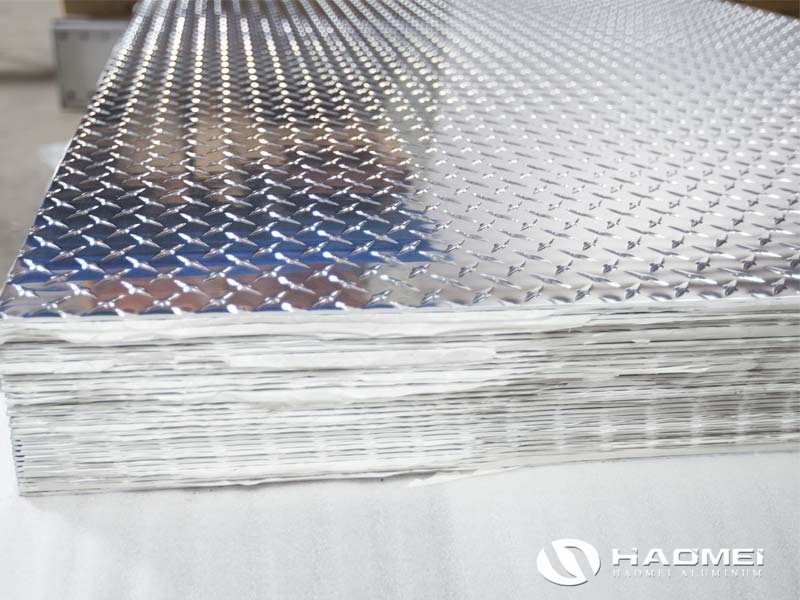
Although steel, stainless steel, and aluminum can all be produced as diamond plate metal sheets, aluminum remains a preferred option in many export markets. It provides favorable corrosion resistance, low density, easy fabrication, and a high strength-to-weight ratio. These advantages are particularly valuable for truck bodies, marine decks, trailers, toolboxes, stair treads, and decorative wall protection.
Diamond plate metal sheets are generally produced by rolling aluminum coil or sheet through patterned rolls. The rolling process forms a raised tread on one side while keeping the reverse side comparatively flat. The pattern can be a single-bar, two-bar, three-bar, five-bar, or diamond design, depending on regional preferences and end-use requirements.
For aluminum products, 3003 and 5052 are among the most common alloy choices. Alloy 3003 offers good formability and practical corrosion resistance, making it suitable for general-purpose cladding, interior panels, and moderate-duty flooring. Alloy 5052 has higher strength and stronger resistance to marine and industrial environments, making it a suitable option for demanding applications involving moisture, salt exposure, or repeated loading.
The raised pattern on diamond plate metal sheets should be consistent in height, direction, and spacing. Uneven embossing can affect appearance and may reduce traction performance. Reliable mills also control sheet flatness and edge quality, helping downstream users cut, bend, weld, and install the material efficiently.
The right specification depends on whether diamond plate metal sheets are used mainly for appearance, protection, or structural support. A thin decorative panel may perform well on a wall or cabinet face, but the same thickness may not be appropriate for a walkable platform or trailer floor.
Typical thickness selections include:
1.0-1.5 mm: Decorative trims, wall protection, cabinets, toolboxes, and interior panels.
2.0-3.0 mm: Vehicle linings, ramps, steps, utility boxes, and medium-duty floor surfaces.
4.0-6.0 mm: Heavy-duty platforms, industrial walkways, vehicle floors, and loading areas.
When comparing thickness, buyers should confirm whether the stated measurement refers to base thickness only or total thickness including the raised pattern. This distinction is important when diamond plate metal sheets must fit an engineered frame, door opening, extrusion channel, or fabricated assembly.
For common stock-size procurement, 4x8 aluminum diamond plate is widely used by distributors and fabrication workshops because it reduces cutting waste for many vehicle and building applications. Customized widths, lengths, and coil supply are often more cost-effective for repeat-volume programs.
Diamond plate metal sheets are available in mill finish, polished finish, brushed finish, anodized finish, and color-coated options. The correct finish should be selected according to exposure conditions and visual expectations rather than appearance alone.
Mill finish is economical and commonly used for industrial fabrication. It retains the natural aluminum surface and is suitable where functional performance matters more than a reflective appearance. Polished diamond plate metal sheets are often selected for trailer accessories, retail displays, vehicle trim, and decorative panels. However, polished surfaces need careful protection during processing and transit because scratches are more visible.
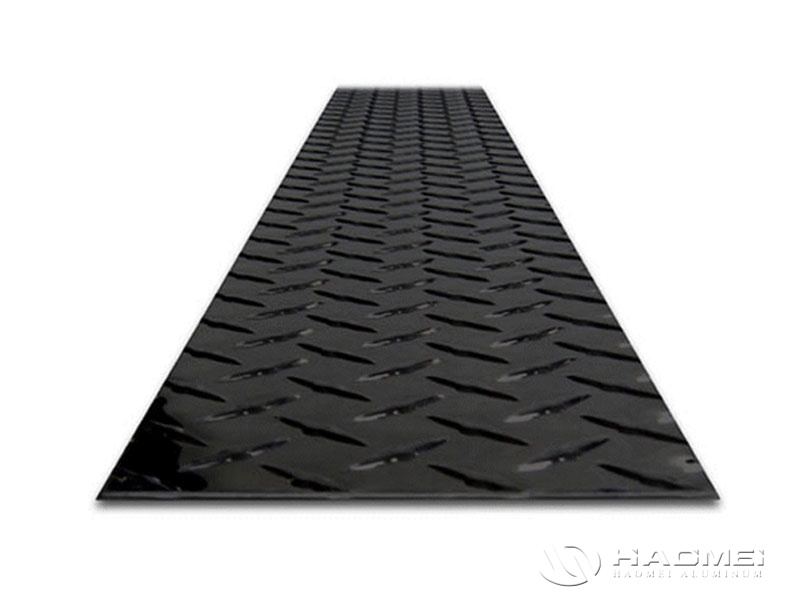
Color-coated and black products can support architectural, automotive, and branded equipment applications. Buyers should verify coating thickness, adhesion, color consistency, UV resistance, and film protection requirements before placing bulk orders. For outdoor use, coating quality should be evaluated alongside the base alloy because the substrate remains essential to long-term corrosion performance.
A professional quality inspection plan for diamond plate metal sheets should cover both mechanical requirements and visual condition. The most effective approach is to define acceptance criteria in the purchase order before production begins.
Important inspection points include:
Alloy and temper verification: Confirm that the material matches the requested grade, such as 3003-H22 or 5052-H32.
Thickness tolerance: Measure the base metal at multiple locations and clarify the permitted variance.
Pattern definition: Check tread height, pattern uniformity, direction, and embossed surface continuity.
Flatness and edge condition: Excessive waviness, edge cracking, or burrs can increase fabrication time.
Surface defects: Inspect for roll marks, dents, oxidation, oil stains, scratches, and coating irregularities.
Dimensions and squareness: Confirm width, length, diagonal tolerance, and cut-edge accuracy.
Protective packaging: Verify interleaving paper, PVC film, moisture barrier materials, pallet strength, and export marking.
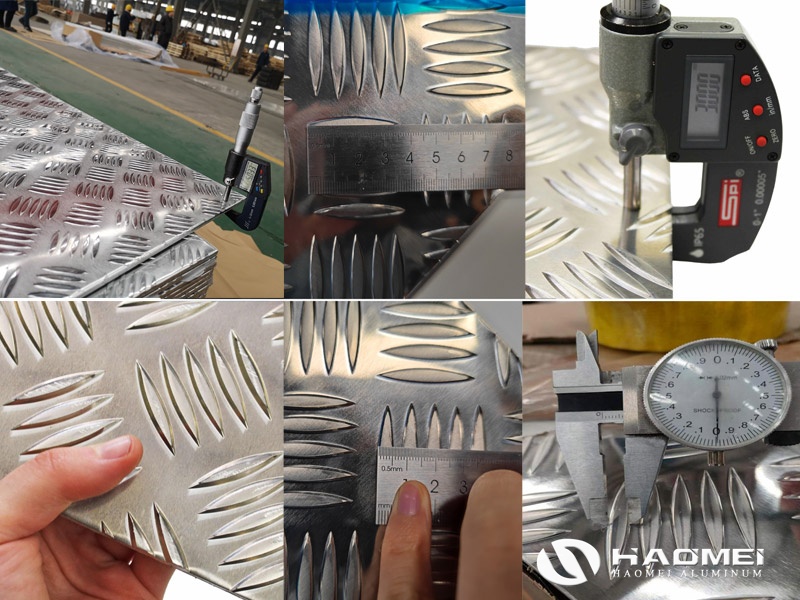
For applications that require predictable processing, buyers may also request material test certificates, chemical composition reports, and mechanical property data. These documents help distributors serve technical customers and help fabricators avoid material mix-ups at the workshop level.
Diamond plate metal sheets solve several practical challenges at once: they offer surface traction, impact protection, corrosion resistance, and a finished industrial appearance. In transportation, aluminum tread plate can reduce equipment weight compared with steel alternatives, supporting payload efficiency and easier handling.
Common uses include truck beds, trailer floors, bus steps, pickup accessories, marine gangways, machinery guards, cold-room panels, warehouse platforms, stair treads, and anti-slip walkways. For decorative use, diamond plate metal sheets are also installed on garage walls, counters, elevator interiors, retail fixtures, and workshop cabinets.
In wet or coastal environments, 5052 aluminum diamond plate is often preferred because of its enhanced resistance to saltwater and atmospheric corrosion. For basic indoor protection or decorative fabrication, 3003 can be a practical, cost-conscious material. Selecting an alloy based on the operating environment prevents over-specification in low-risk uses and under-specification in corrosive conditions.
Buyers comparing patterns may also consider 5 bar diamond plate for applications where a different anti-slip tread design is preferred. Pattern preference can vary by country, local safety practice, and the visual style expected by end customers.
Global demand for diamond plate metal sheets is closely linked to transportation manufacturing, infrastructure maintenance, light commercial vehicles, marine equipment, and industrial renovation. Many distributors now seek mixed-size containers, tailored protective films, and flexible packaging configurations to serve multiple customer segments from a single shipment.
From an export purchasing perspective, the lowest unit price does not always create the lowest final cost. A cheaper sheet with poor flatness, unstable thickness, inconsistent pattern depth, or weak packing can lead to higher scrap rates, customer claims, and local rework expenses. For this reason, experienced buyers evaluate price together with material traceability, production capacity, inspection procedures, loading plans, and shipment reliability.
Container loading should protect diamond plate metal sheets from moisture and movement. Sea freight packaging commonly includes waterproof paper, plastic film, desiccants where appropriate, reinforced wooden pallets, steel or plastic strapping, corner protection, and clear bundle labels. Polished and coated products require additional attention to film quality and separation between sheets.
A clear inquiry should state alloy, temper, base thickness, sheet size, pattern type, surface finish, protective film requirement, tolerances, estimated quantity, destination port, and intended application. This information allows suppliers to quote accurately and helps ensure that the delivered material performs as expected in fabrication and end use.
Before confirming an order for diamond plate metal sheets, purchasers should align technical specifications with the actual operating environment. Ask whether the sheet will be walked on, exposed to seawater, formed into parts, welded, polished, or installed outdoors. The answer determines the most suitable alloy, temper, thickness, and finish.
For repeat orders, maintain approved samples and written inspection standards. This creates consistency between batches and supports stronger quality control across warehouses, distributors, and downstream fabricators. By combining the correct specification with verified production and export packing practices, diamond plate metal sheets can deliver dependable performance across industrial, commercial, and decorative markets.