Cost of Diamond Plate Per Square Foot
Aug-11-2026
When customers ask about the cost of diamond plate per square foot, the most accurate answer is always: it depends on the alloy, thickness, finish, quantity, and current aluminum market. Diamond plate, also called checker plate, tread plate, or embossed aluminum plate, is not a single commodity product. Two sheets with the same dimensions can have very different values when one is lightweight 3003-H22 decorative tread plate and the other is heavy-duty 6061-T6 structural plate.
From my experience in aluminum purchasing and supply, the most common mistake is comparing prices only by sheet size. A 4 x 8 sheet may look economical at first, but its true cost is determined by weight per square foot, metal grade, pattern quality, and fabrication requirements. Knowing how to evaluate these factors helps buyers choose the right material without overpaying for unnecessary strength or under-specifying a demanding application.
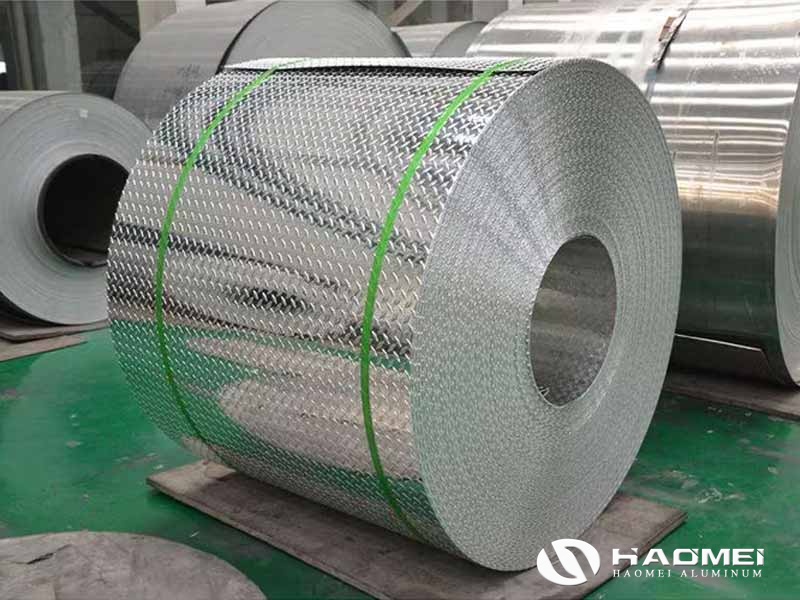
The following ranges are practical budgeting estimates for mill-finish aluminum diamond plate in standard quantities. Actual prices move with LME aluminum values, regional premiums, freight, conversion costs, and supplier inventory.
| Nominal Thickness | Typical Alloy | Approximate Weight per Sq. Ft. | Typical Cost per Sq. Ft. | Common Uses |
|---|---|---|---|---|
| 0.045 in. | 3003-H22 | 0.63 lb. | $3.50-$6.50 | Wall panels, trim, light decorative work |
| 0.063 in. | 3003-H22 | 0.88 lb. | $4.50-$8.00 | Toolboxes, interior panels, trailers |
| 0.080 in. | 3003-H22 | 1.12 lb. | $5.50-$9.50 | RV protection, flooring overlays, kick plates |
| 0.100 in. | 3003-H22 | 1.40 lb. | $6.50-$11.00 | Light-duty steps, vehicle panels |
| 0.125 in. / 1/8 in. | 3003-H22 or 5052-H32 | 1.75 lb. | $8.00-$14.00 | Truck beds, ramps, work platforms |
| 0.250 in. / 1/4 in. | 6061-T6 or 5052-H32 | 3.50 lb. | $16.00-$28.00 | Heavy-duty decks, industrial platforms |
These figures should be treated as a purchasing framework rather than a fixed quotation. Retail cut-to-size purchases are usually higher per square foot than full-sheet or truckload orders. Conversely, a project buyer ordering multiple bundles may receive a significantly better conversion rate and lower freight cost per pound.
A reliable calculation begins with material weight. Aluminum diamond plate is commonly quoted by the pound, sheet, or piece, while fabricators and end users often need a square-foot figure for estimating projects.
Use this formula:
Cost per square foot = Sheet price ÷ Sheet area in square feet
For example, a 4 x 8 sheet contains 32 square feet. If the sheet price is $320:
$320 ÷ 32 sq. ft. = $10 per sq. ft.
For a more detailed estimate, calculate by weight:
Cost per sq. ft. = Weight per sq. ft. × Price per lb.
If 1/8-inch diamond plate weighs approximately 1.75 lb. per square foot and the delivered material price is $5.20 per lb., the estimated cost is:
1.75 × $5.20 = $9.10 per sq. ft.
Keep in mind that raised tread adds material and affects the final weight. Nominal thickness usually refers to the base metal, while overall thickness includes the diamond pattern. This distinction matters when the plate must fit under doors, inside trailer channels, or into fabricated assemblies.
3003-H22 is the most widely used alloy for general-purpose diamond plate. It offers excellent formability, good corrosion resistance, moderate strength, and a clean mill finish. It is especially popular for decorative wall protection, trailer interiors, truck toolboxes, RV trim, garage panels, and light flooring.
Because 3003 is readily available and easy to emboss, it is generally the most cost-effective choice. When a customer needs appearance, corrosion resistance, and modest durability rather than structural loading capacity, I normally recommend starting with 3003-H22.
5052-H32 has higher magnesium content and stronger corrosion resistance than 3003. It performs very well in wet, marine, coastal, chemical, and transportation environments. It is also stronger than 3003, making it a good option for walkways, utility trailers, boat components, and demanding vehicle applications.
The cost per square foot is usually higher than 3003, but the upgrade is often justified when moisture, salt, abrasion, or repeated loading are involved. Choosing 5052 can reduce replacement and maintenance costs over the working life of the project.
6061-T6 is a heat-treatable structural alloy with excellent strength and machining performance. It is used where diamond plate must contribute meaningful load-bearing capacity, such as industrial decks, equipment platforms, ramps, machinery guards, and fabricated structural components.
This alloy generally commands the highest price among common aluminum tread plate options. It is not always necessary for cosmetic or low-load uses, but it is a dependable choice where stiffness and mechanical strength are critical.
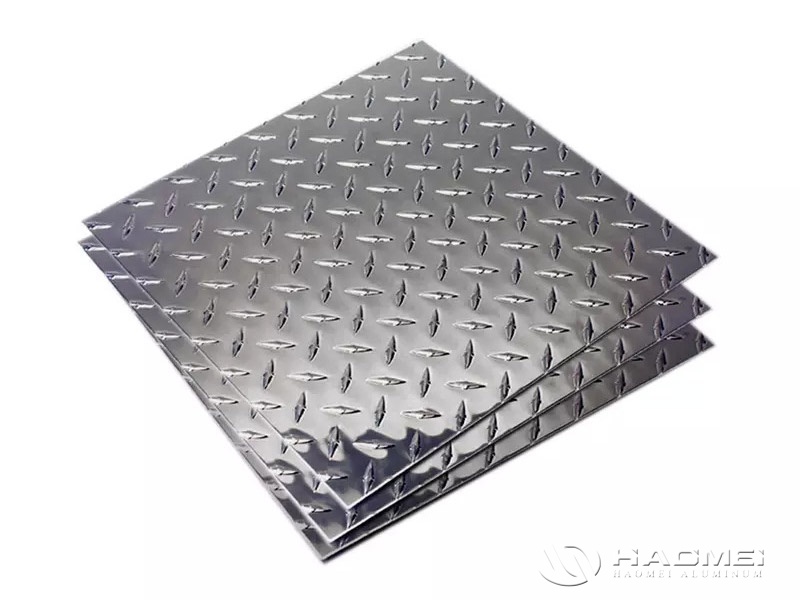
Temper describes the hardness and condition of the aluminum. Common tempers include H22 and H32 for non-heat-treatable alloys, plus T6 for 6061. A harder temper improves dent resistance and strength, although it may reduce formability.
Diamond plate patterns also affect value. Standard raised diamond patterns are common in North America, while five-bar tread patterns are widely used in industrial and architectural projects. Pattern definition should be consistent across the sheet, with uniform embossing, clean surface appearance, and no visible flattening caused by poor handling.
Mill finish remains the most economical option. Bright, polished, anodized, painted, and black-coated diamond plate can increase the cost per square foot because of additional processing and stricter surface requirements. For high-visibility applications, the appearance premium may be worthwhile. For hidden equipment decks or utility flooring, mill finish often provides the best value.
For buyers comparing standard sizes, our 4x8 aluminum diamond plate options provide an efficient format for trailer, garage, truck, and fabrication projects. Larger sheets can also lower scrap loss when the project requires long continuous panels.
Aluminum diamond plate earns its market position because it balances practical performance with a distinctive appearance:
Lightweight: Aluminum weighs about one-third as much as steel, making installation and transportation easier.
Slip resistance: The raised pattern improves traction for footwear, carts, and equipment, especially on dry surfaces.
Corrosion resistance: Aluminum naturally forms an oxide layer that protects the base metal in many service environments.
Low maintenance: It does not require the routine painting associated with carbon steel.
Workability: It can be cut, drilled, bent, riveted, welded, and fabricated using appropriate methods.
Attractive finish: The geometric tread pattern provides a clean industrial appearance for both commercial and residential applications.
For wall cladding, wainscoting, cabinet faces, and decorative trim, thin 0.045- to 0.063-inch 3003-H22 material is often sufficient. For trailer stone guards, pickup-box protection, and RV panels, 0.080- to 0.100-inch stock offers a better balance of rigidity and weight.
Flooring and walkways require more careful evaluation. The plate thickness must match the span between support members, expected point loads, traffic frequency, and safety requirements. A 1/8-inch sheet may work well when supported closely, while a 1/4-inch 5052 or 6061 plate may be necessary for wider spans and industrial traffic.
For more detailed product selection, our diamond plate sheet range includes options suitable for decorative, transportation, marine, and heavy-duty fabrication needs.
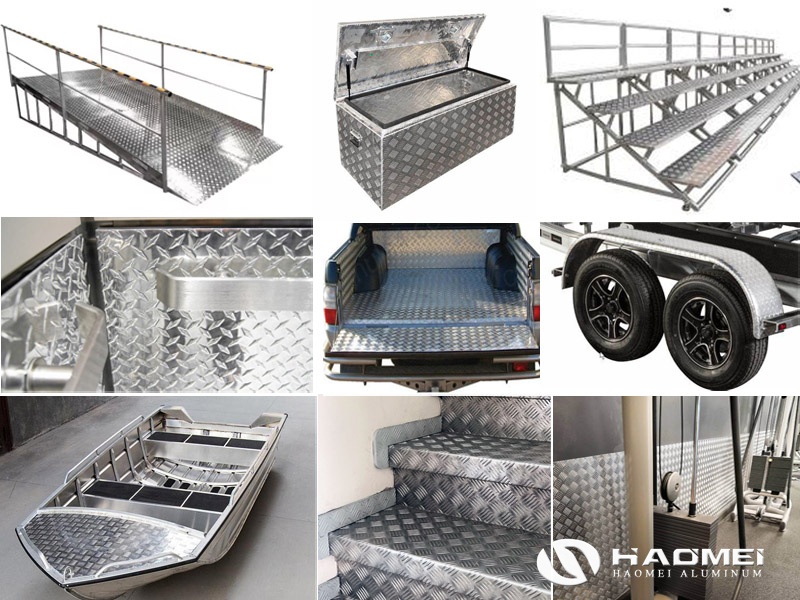
The lowest quoted cost of diamond plate per square foot is not always the lowest installed cost. I recommend confirming five points before placing an order: alloy, base thickness, overall tread height, sheet flatness, and protective packaging. These details become especially important for polished surfaces, visible architectural panels, and CNC-fabricated parts.
Buyers should also ask whether the price includes cutting, PVC film, palletizing, export packing, freight, and applicable metal surcharges. A low ex-works figure can become expensive after logistics and processing charges are added. For recurring programs, locking in alloy, temper, thickness tolerance, and sheet dimensions early can improve price stability and reduce production disruptions.
With the correct alloy and thickness, aluminum diamond plate delivers long-term value through low weight, dependable corrosion resistance, slip-resistant texture, and strong visual appeal.