Black Diamond Sheet
Aug-13-2026
A black diamond sheet combines the practical anti-slip profile of aluminum tread plate with a durable black surface that supports modern industrial, transport, and architectural designs. It is widely specified for trailer flooring, truck toolboxes, vehicle steps, protective wall panels, machinery guards, and commercial interiors. For importers and fabricators, selecting the right black diamond sheet requires more than choosing a color: alloy, base thickness, tread height, coating type, dimensional tolerance, and packing method all affect service life and landed cost.
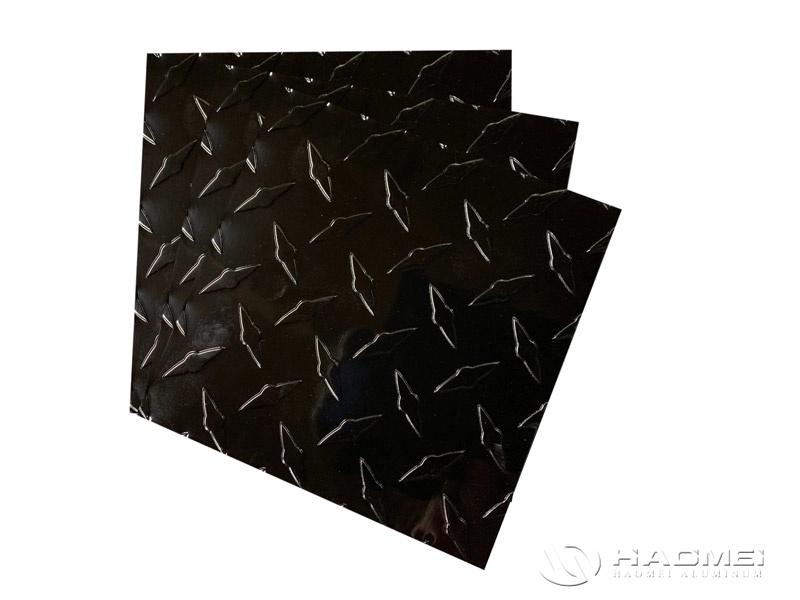
A black diamond sheet is an aluminum tread plate with a raised diamond pattern and a black finished surface. The raised pattern improves traction while adding rigidity and visual depth to the panel. In different markets, buyers may also call it black checker plate, black tread plate, black aluminum diamond plate, or black embossed aluminum sheet.
Most black diamond sheet products begin with aluminum alloy coil or sheet that is embossed with a one-bar, two-bar, three-bar, or five-bar pattern. The classic diamond design remains especially popular in North America because it is familiar in utility trailers, pickup accessories, workshops, and industrial flooring. After embossing, the material may receive powder coating, PE color coating, PVDF coating, anodizing, or a protective laminated film depending on the intended application.
For projects that need standard embossed aluminum without color treatment, aluminum diamond plate is often used as the base material category for comparing alloy and thickness options.
The performance of a black diamond sheet depends heavily on its alloy. Export buyers should confirm the alloy and temper before evaluating appearance, since these factors determine corrosion resistance, formability, and load-bearing capability.
3003 is one of the most common choices for black diamond sheet production. It offers good corrosion resistance, moderate strength, and reliable formability. It is suitable for decorative panels, trailers, vehicle interiors, wall protection, ramps with moderate traffic, and light industrial fabrication. Tempers such as H22 and H24 are frequently requested because they provide a practical balance between strength and workability.
5052 is preferred when the black diamond sheet will operate in humid, marine, chemical, or outdoor environments. It provides higher strength and better corrosion resistance than 3003. Typical applications include boat decking components, dock equipment, marine trailers, coastal construction, service vehicles, and demanding industrial platforms.
6061 tread plate can be selected for structural applications where higher mechanical strength is required. However, forming and coating requirements should be reviewed carefully. Buyers should avoid assuming that every black diamond sheet needs 6061; in many decorative or medium-duty projects, 3003 or 5052 provides better cost efficiency.
The black surface is not simply a cosmetic detail. Its coating technology influences UV resistance, scratch performance, color stability, and maintenance requirements. A black diamond sheet installed inside a toolbox has different coating needs from a panel used outdoors in strong sunlight.
Common finish options include:
Powder coating: Produces a durable, even black finish with good wear resistance. It is popular for vehicle accessories, cabinets, wall cladding, and fabricated components.
PE color coating: A cost-effective option for indoor use or short-to-medium-term outdoor service. It is often chosen for general decorative panels.
PVDF coating: Offers stronger UV and weather resistance for architectural and exterior projects, especially in hot, coastal, or high-sunlight regions.
Anodized black finish: Provides a metallic appearance and good corrosion protection, although color matching and availability should be confirmed for embossed patterns.
Protective film: A removable film can reduce scratches during fabrication, transport, and installation. It should be specified by thickness and adhesion level.
A matte black diamond sheet is frequently selected for industrial vehicles and commercial interiors because it hides fingerprints and minor abrasions better than high-gloss surfaces. Gloss black can create a more premium visual effect, but it may show handling marks more easily.
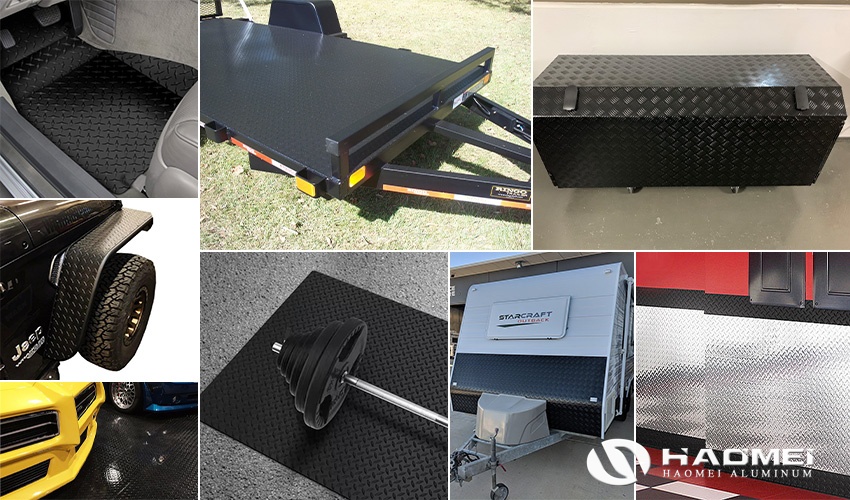
Thickness selection should be based on base metal thickness, not only total thickness after embossing. The raised diamonds add profile height, but they should not be treated as equivalent to load-bearing metal thickness.
Common black diamond sheet base thicknesses include 1.0 mm, 1.2 mm, 1.5 mm, 2.0 mm, 2.5 mm, 3.0 mm, 4.0 mm, and 5.0 mm. Thin gauges are commonly used for decorative wall panels, cabinet faces, and toolboxes. Medium gauges suit truck beds, trailer sides, steps, and equipment guards. Heavier gauges may be used for walkways, ramps, flooring, and protective industrial structures.
Typical export sizes include 1000 x 2000 mm, 1220 x 2440 mm, 1250 x 2500 mm, 1500 x 3000 mm, and customized cut lengths. Buyers serving the U.S. and Canadian markets often request 4 x 8 ft panels. When the project calls for this format, a black aluminum diamond plate specification should clarify whether dimensions refer to nominal or actual cut size.
For container loading, assess sheet dimensions alongside pallet design. Long panels can improve processing efficiency for end users but may increase freight complexity, handling risk, and packaging costs.
The versatility of black diamond sheet is one reason it remains in steady demand across transport, construction, fabrication, and retail fixture markets. Its combination of corrosion resistance, low weight, and visual appeal makes it a practical alternative to painted steel checker plate in many environments.
Common applications include:
Trailer floors, fenders, side panels, and loading areas
Pickup truck bed protection and toolbox covers
Vehicle running boards, steps, and interior wall linings
Marine access panels, storage boxes, and dock-side equipment
Industrial walkways, safety guards, workstations, and machine enclosures
Retail displays, bar fronts, counters, and commercial wall decoration
Garage cabinets, workshop panels, and storage systems
For flooring applications, black diamond sheet should be evaluated for actual slip performance under wet, oily, dusty, or icy conditions. The raised pattern improves grip, but it does not eliminate the need for safe drainage, cleaning procedures, and application-specific safety design.
A well-managed procurement process evaluates both material quality and coating consistency. Importers should ask suppliers for alloy certificates, thickness records, coating details, and sample approval before placing a bulk order.
Important inspection points include:
Base thickness tolerance: Measure the flat base area rather than the peak of the diamond pattern.
Pattern definition: The diamond pattern should be clear, consistent, and free from crushed or uneven sections.
Color consistency: Compare black color across multiple sheets or coils under controlled lighting conditions.
Coating adhesion: Confirm that the finish will not peel or crack during cutting, bending, drilling, or normal fabrication.
Surface defects: Inspect for dents, oil marks, pinholes, scratches, roller marks, and coating contamination.
Flatness and edge condition: Verify that sheets are suitable for the intended cutting, CNC routing, bending, or installation process.
Protective packing: Use interleaving paper, film, corner guards, waterproof wrapping, and seaworthy pallets for export shipments.
For black diamond sheet supplied in coils, the buyer should also confirm coil ID, coil weight, camber tolerance, and whether the coating can withstand decoiling and roll forming operations.
Demand for black diamond sheet is supported by growth in utility trailers, recreational vehicles, off-road accessories, modular commercial interiors, and lightweight industrial equipment. Black finishes align with current preferences for matte, rugged, and low-maintenance design themes. This has created opportunities for distributors that stock common sizes while offering cut-to-length and fabrication support.
However, black diamond sheet pricing should not be compared only by weight. A lower quotation may use thinner base metal, less durable coating, inconsistent embossing, or weaker export packaging. For recurring procurement, buyers benefit from comparing technical specifications line by line, including aluminum ingot price basis, processing charges, coating type, film requirements, tolerances, and freight terms.
For distributors, maintaining a small but focused range of black diamond sheet thicknesses can reduce inventory complexity. Fast-moving sizes in 3003 and 5052 alloys usually offer the best balance between stock turnover and customer coverage. Project buyers should request pre-production samples when color matching, exterior durability, or fabrication performance is critical.
A complete black diamond sheet inquiry should state the alloy, temper, base thickness, overall embossed thickness if needed, width, length, pattern type, black finish, protective film, quantity, packing method, and destination port. If the material will be bent or welded, include the fabrication method so the supplier can recommend an appropriate alloy and coating system.
Clear specifications reduce disputes and help suppliers prepare material that performs consistently from the first container to repeat orders. With the right alloy, coating, and inspection standards, black diamond sheet can deliver durable traction, lightweight corrosion resistance, and a distinctive finish for industrial and commercial applications.