4x8 Diamond Plate Price
Aug-18-2026
When buyers ask about 4x8 diamond plate price, the first answer should never be a single number. A 4 x 8 ft aluminum diamond plate sheet can vary substantially in cost according to alloy, thickness, temper, tread pattern, surface finish, order quantity, and the aluminum market on the day of purchase. Freight, packaging, cutting tolerance, and whether the sheet is stocked or made to order can also influence the delivered price.
From my experience working with aluminum products and following commodity movements, the most reliable way to evaluate price is to connect it with usable value. A lower-priced sheet is not always economical if its tread pattern is shallow, its flatness is inconsistent, or the alloy does not suit the working environment. A properly specified aluminum diamond plate provides corrosion resistance, slip resistance, easy fabrication, and a long service life with very limited maintenance.
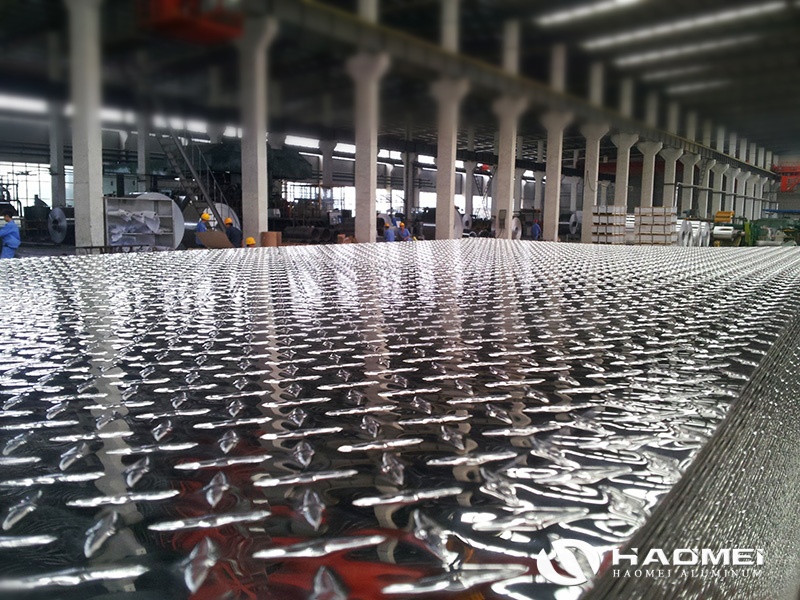
A standard 4 x 8 sheet measures 48 x 96 inches, or 1,219 x 2,438 mm. It is one of the most practical formats for truck bodies, flooring, wall protection, toolboxes, stairs, ramps, trailers, and architectural panels. The sheet price is primarily calculated from aluminum weight plus processing and commercial costs.
Key price variables include:
Alloy grade: 3003 is generally the mainstream economical choice, while 5052 carries a premium for higher strength and marine-grade corrosion resistance.
Thickness: A 1/16 in sheet costs far less than a 1/4 in sheet because material weight rises sharply with thickness.
Temper: H22, H24, H32, and H34 tempers affect hardness, formability, and manufacturing cost.
Finish: Mill finish is usually the most economical. Polished, anodized, painted, or coated finishes add value and cost.
Tread pattern quality: Consistent raised diamonds improve appearance and traction. Deep, sharply formed tread requires controlled rolling.
Order quantity: Full bundles, regular container loads, and repeat purchasing usually secure better unit pricing than individual sheets.
Aluminum market movement: Primary aluminum and regional premiums can change quickly, particularly during periods of tight supply or high energy costs.
For a project-specific quotation, buyers should compare the same alloy, thickness, finish, and net weight. Comparing only price per sheet can be misleading because two nominally similar sheets may have different base thicknesses or tread heights.
The two most widely used alloys are 3003 and 5052. Both are non-heat-treatable aluminum alloys that are strengthened by cold working, but they serve different priorities.
| Alloy | Typical Tempers | Main Properties | Best-Fit Applications |
|---|---|---|---|
| 3003 | H22, H24 | Good corrosion resistance, excellent workability, economical cost | Interior floors, decorative panels, wall guards, light-duty trailers |
| 5052 | H32, H34 | Higher strength, excellent saltwater corrosion resistance, better fatigue performance | Marine decks, work trucks, industrial platforms, heavy-duty trailers |
| 6061 | T6 | High structural strength, good machinability | Fabricated structural parts where a tread surface is needed |
3003 aluminum diamond plate is the most common selection for general commercial use. It contains manganese, which improves strength over pure aluminum while retaining very good formability. In my view, 3003-H22 or H24 is often the right balance for customers seeking attractive, corrosion-resistant tread plate at a controlled budget.
It performs well for non-structural flooring, garage walls, kick plates, storage boxes, utility trailers, and decorative vehicle applications. For ordinary indoor or dry-environment service, it delivers excellent value.
5052 is a magnesium-containing alloy known for better strength and exceptional corrosion resistance. It is especially suitable for damp, coastal, marine, and industrial locations. A 5052-H32 sheet generally costs more than 3003, but that difference is justified where durability, repeated loading, or exposure to salt spray matters.
For buyers comparing 4x8 aluminum diamond plate options, I usually recommend 5052 when the panel will become a working floor, a truck platform, a boat-deck component, or an exterior surface subjected to harsh weather. Spending slightly more on the correct alloy can prevent premature replacement and reduce downtime.
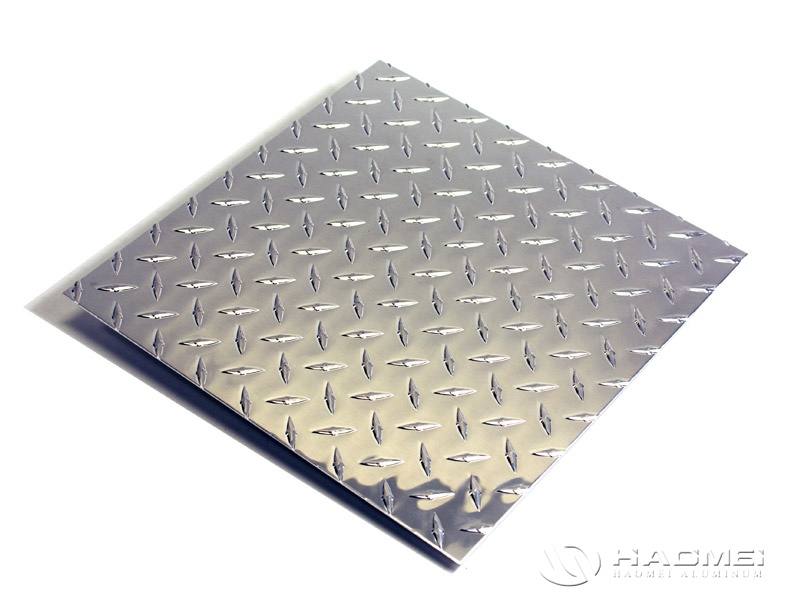
Temper indicates the degree of strain hardening applied to the sheet. H22 and H24 provide moderate hardness with reasonable forming ability. H32 and H34 are harder tempers commonly chosen for 5052 products requiring improved dent resistance and strength.
Popular thicknesses for 4 x 8 aluminum diamond plate include:
| Nominal Thickness | Approximate Common Use |
|---|---|
| 0.045-0.063 in | Decorative cladding, wall panels, light protection |
| 0.080-0.100 in | Toolboxes, cabinets, light trailer surfaces |
| 0.125 in, 1/8 in | Truck beds, ramps, medium-duty floors |
| 0.190-0.250 in | Heavy-duty flooring, industrial platforms, robust trailer decks |
It is important to clarify whether a thickness refers to the base metal thickness or the overall thickness including raised diamonds. Industry practice often identifies the base gauge, but assumptions create problems. I have seen avoidable disputes when buyers expected a full 1/8 in base and received a measurement taken over the tread. A professional supplier should state base thickness, tolerance, pattern height, and sheet weight clearly.
Aluminum diamond plate has remained popular because it combines functional traction with a clean industrial appearance. Its principal advantages include:
Light weight: Aluminum is approximately one-third the weight of steel, helping reduce vehicle mass and improve payload efficiency.
Corrosion resistance: The natural oxide layer protects aluminum in many outdoor and humid environments.
Slip-resistant pattern: Raised diamonds improve grip for walking surfaces, steps, ramps, and service platforms.
Easy fabrication: The material can be cut, drilled, bent, welded, and riveted using appropriate procedures.
Low maintenance: Mill-finish material is easy to clean, while polished and coated versions offer stronger decorative appeal.
Recyclability: Aluminum retains significant recycling value, which supports lifecycle economics.
For a broader selection of finishes, patterns, and gauges, our diamond plate sheet range can be matched to fabrication requirements and service conditions.
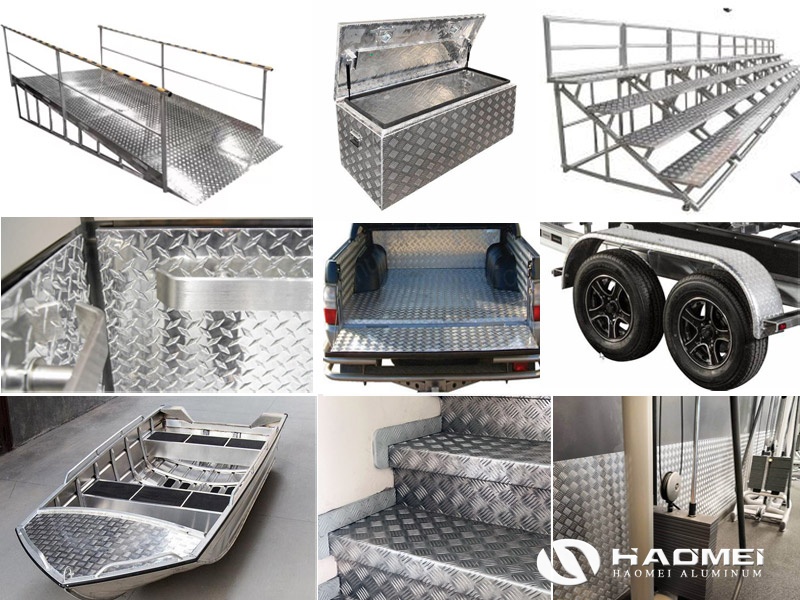
The practical uses of 4 x 8 aluminum diamond plate are extensive. In transportation, it is used for truck beds, trailer floors, pickup accessories, step plates, wheel covers, and cargo-area protection. In marine fabrication, 5052 tread plate is a trusted material for decks, gangways, lockers, and dock equipment due to its resistance to moisture and saltwater exposure.
Industrial users install diamond plate on walkways, machine guards, work platforms, stair treads, and warehouse protection panels. Construction firms use it for temporary flooring and equipment access surfaces. Retail and architectural projects use polished or colored diamond plate for wall panels, counters, elevator interiors, and visual accents.
The best purchasing approach is to provide a complete specification instead of requesting only a sheet price. State the alloy, temper, base thickness, sheet dimensions, finish, tread style, required quantity, destination, and any special packaging needs. For export shipments, confirm whether sheets require interleaving paper, protective film, wooden pallets, edge protection, or seaworthy packing.
I also advise checking actual sheet weight against the quoted specification. Weight is a useful indicator of whether the thickness and dimensions meet expectations. For recurring projects, locking in a supply arrangement or monitoring aluminum index movements can reduce exposure to sudden price changes.
A well-chosen 4x8 diamond plate is more than a commodity sheet. It is a working material that must carry loads, resist corrosion, provide traction, and maintain a professional appearance over time. Selecting the appropriate alloy and temper ensures that the price paid translates into dependable long-term performance.