Embossed Aluminum 1100 Supplier
May-08-2026
When buyers search for an embossed aluminum 1100 supplier, they are usually looking for more than a decorative sheet. In my experience in the aluminum market, most customers actually want a combination of stable alloy quality, clean embossing patterns, reliable thickness control, and predictable delivery. Price matters, of course, but in embossed products, consistency often matters even more. A low-priced coil that shows uneven patterns, edge waviness, or poor flatness can create far higher downstream costs in fabrication.
As a professional supplier, we understand that 1100 embossed aluminum is chosen because it offers an excellent balance of formability, corrosion resistance, surface appearance, and cost efficiency. It is widely used in refrigeration panels, pipe insulation, trailer interiors, decorative surfaces, and general industrial applications where a light, workable, and visually attractive aluminum product is required.
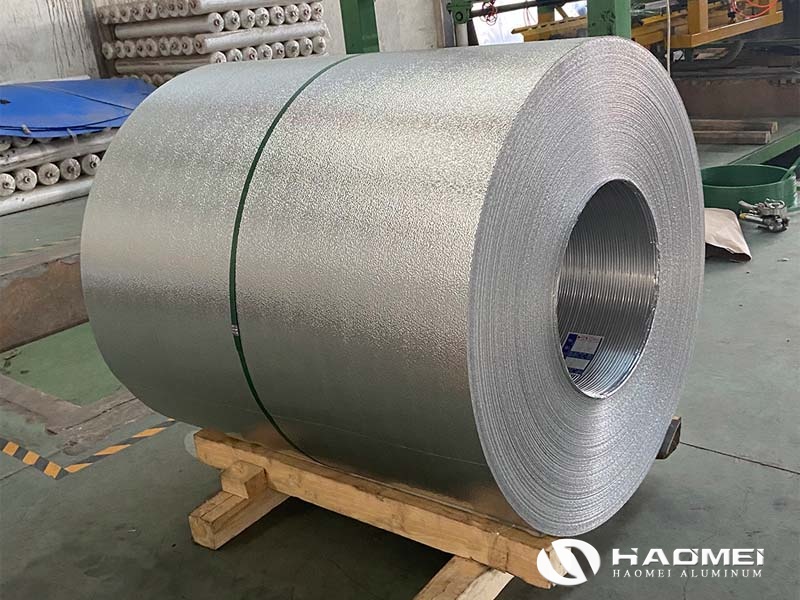
1100 aluminum is a commercially pure aluminum alloy, with aluminum content typically above 99.0%. It is one of the most widely used grades in the 1xxx series. When processed into embossed sheet or coil, the surface is mechanically patterned to create textures such as stucco, orange peel, pebble, or other raised finishes.
The embossed finish does more than improve appearance. It can also increase surface rigidity, reduce visible scratches, improve slip resistance in certain uses, and enhance heat reflection or diffusion depending on the application.
For buyers comparing materials, 1100 embossed aluminum is often preferred when the project needs:
Excellent corrosion resistance
Good thermal conductivity
Very good workability
Attractive patterned surface
Competitive pricing versus more alloyed grades
If your project requires standard textured products, our Embossed Aluminum range covers multiple patterns and thickness options for industrial and decorative use.
An embossed aluminum 1100 supplier should be able to offer the material in several forms depending on fabrication methods and end-use demands.
Embossed aluminum sheet
Embossed aluminum coil
Cut-to-length panels
Circle or strip upon request
Stucco embossed
Orange peel
Pebbled texture
Hammered style
Among these, stucco embossed remains the most common for insulation cladding and refrigeration applications because it combines practical rigidity with a clean industrial look. For customers specifically needing this texture, our Stucco Embossed Aluminum Sheet solutions are often the first recommendation.
Although the focus here is 1100 embossed aluminum, buyers often compare it with 1050, 1060, and 3003. From a supplier's viewpoint, 1100 is especially valued when high purity and superior formability are priorities.
| Alloy | Main Characteristics | Typical Use |
|---|---|---|
| 1100 | High purity, soft, corrosion resistant, easy to form | Insulation, decorative panels, refrigerator parts |
| 1050 | Similar high purity, slightly different mechanical profile | General embossing, reflectors |
| 1060 | Excellent conductivity and corrosion resistance | Electrical and industrial panels |
| 3003 | Higher strength due to manganese addition | Cladding, roofing, transport panels |
| Temper | Characteristics | Suitable Applications |
|---|---|---|
| O | Fully annealed, softest, best formability | Deep forming, shaping, decorative fabrication |
| H14 | Strain hardened to a half-hard condition | General sheet metal work, panels |
| H16 | Harder than H14, better rigidity | Cladding, covers, protective surfaces |
| H18 | Full hard, high surface stability | Limited forming, flat applications |
| H24 | Strain hardened and partially annealed | Balanced strength and workability |
In practical supply, H14 and H24 are among the most requested tempers for embossed 1100 because they give a useful compromise between embossing retention and fabrication performance.
From a technical and purchasing perspective, these are the properties that usually drive selection.
1100 alloy performs very well in humid and mildly corrosive environments. This is one reason it remains a dependable choice for refrigerator liners, insulation covers, and decorative interior applications.
Because 1100 is relatively soft, it can be bent, rolled, cut, and shaped easily. This is especially important for customers fabricating jacketing, corner panels, and formed covers.
This alloy transfers heat efficiently, which is valuable in refrigeration and heat-related industrial applications.
Aluminum is naturally light, and embossing adds a measure of stiffness to the sheet. In many cases, this allows better handling and a more solid appearance without adding significant weight.
Embossed textures help reduce the visual impact of handling marks and minor surface imperfections. In the real market, this can be a major advantage, especially for visible installations.
Not all embossed material is equal. I have seen many projects where customers focused only on price per ton, only to discover later that pattern depth was inconsistent or the coil had tension issues during processing. A professional supplier should control more than alloy chemistry.
Stable base metal quality
Uniform embossing depth and appearance
Accurate gauge tolerance
Good flatness and coil winding quality
Clean surface with protective packaging options
Flexible width and length customization
Clear export standards and documentation
These points may sound basic, but they have direct cost implications. In embossed aluminum, poor pattern consistency can affect both aesthetics and installation efficiency. Strong supply control often saves more money than negotiating the last few dollars on unit price.
The most common market specifications for 1100 embossed aluminum usually fall within the following ranges.
| Item | Typical Range |
|---|---|
| Thickness | 0.2 mm - 1.5 mm |
| Width | 30 mm - 1500 mm |
| Length | Custom cut-to-length |
| Temper | O, H14, H16, H18, H24 |
| Surface | Stucco, orange peel, pebble, customized |
Actual production range depends on pattern depth, base material thickness, and end-use requirements.
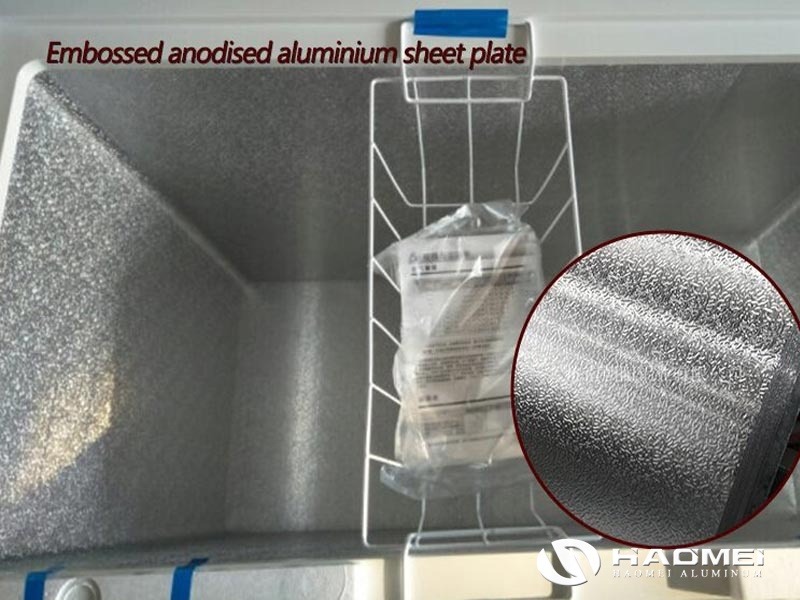
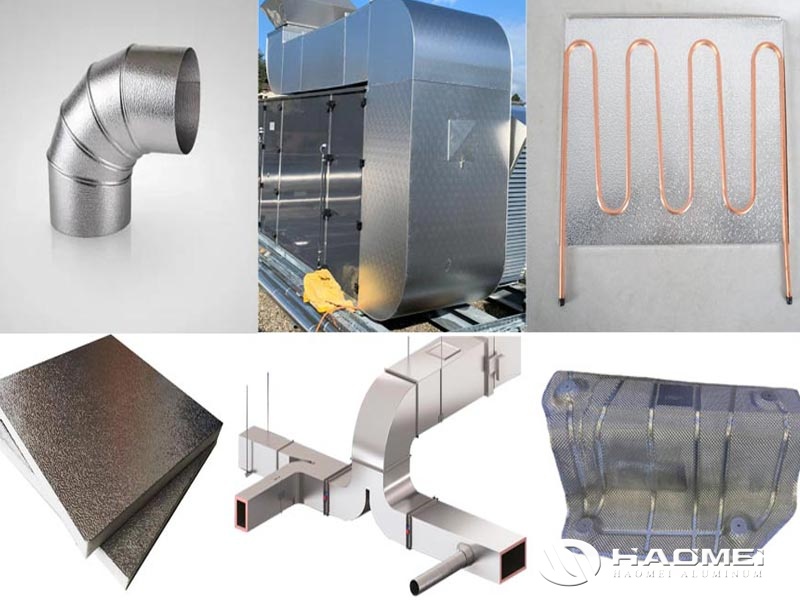
1100 embossed aluminum is widely used for refrigerator back panels, evaporator covers, insulation facings, and appliance interiors. The material is easy to process and offers a clean, durable appearance.
In insulation systems, embossed aluminum helps protect pipes, tanks, and vessels. The stucco surface improves rigidity and reduces the visibility of installation marks.
Architectural and interior projects use embossed 1100 sheet for ceilings, wall panels, column covers, and trim components where light weight and corrosion resistance are important.
The material can also be used for trailer interiors, equipment casings, and protective coverings where a textured aluminum surface is preferred.
Our approach is not limited to selling sheet or coil. We work with customers based on application, forming method, and budget target. In many inquiries, the real question is not simply "Do you have 1100 embossed aluminum?" but rather "Which thickness, temper, and pattern will give the best result in my production line?"
That is where supplier experience matters. For example:
For refrigerator panels, surface consistency and coil cleanliness are especially important.
For insulation jacketing, pattern definition and weather resistance are key.
For decorative use, customers usually focus more on visual uniformity and scratch masking.
Because aluminum prices move with LME fluctuations, energy costs, and rolling demand, I usually advise buyers to evaluate both market timing and inventory planning together. Securing stable supply windows can be just as valuable as chasing the lowest short-term quote.
Before confirming an order, it is wise to review the following:
Alloy grade and chemical standard
Temper requirement
Thickness tolerance
Pattern type and depth
Coil ID, OD, or sheet dimensions
Surface protection requirement
Packaging standard for local or export shipment
End-use application details
The more clearly these points are defined, the easier it is for a supplier to match the product to the project.
For customers who value dependable quality, responsive communication, and practical technical support, embossed aluminum 1100 remains one of the most versatile products in the market. With the right alloy-temper combination and a supplier that understands real processing conditions, it delivers strong value across industrial, commercial, and decorative applications.