Aluminum Diamond Plate 4x8 Sheet Weight
Aug-17-2026
When buyers ask about aluminum diamond plate 4x8 sheet weight, the answer depends primarily on thickness, alloy, and whether the stated gauge refers to the base sheet or the overall height including the raised tread pattern. A standard 4 x 8 ft sheet measures 48 x 96 inches, or 32 square feet. Because aluminum has a density of approximately 0.0975 lb/in³, it provides a useful strength-to-weight balance for flooring, transportation equipment, wall protection, and fabrication work.
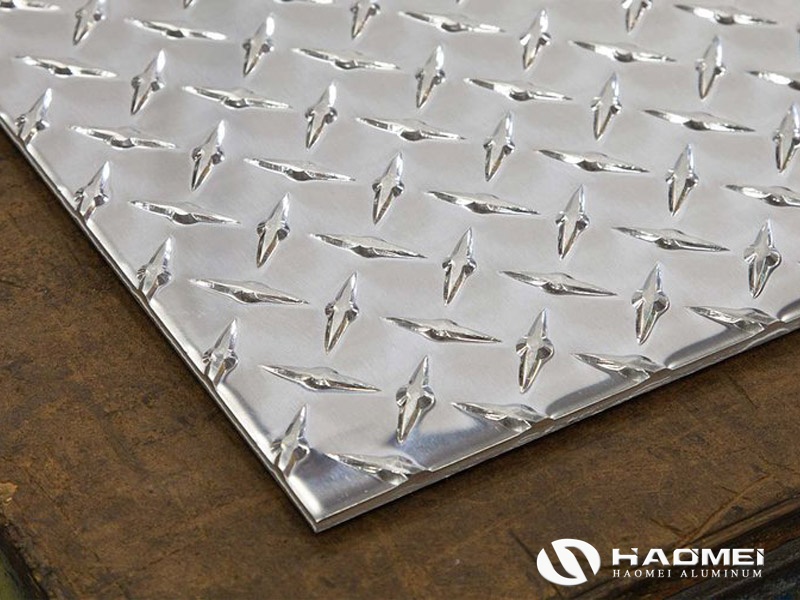
From a production perspective, weight is more than a shipping detail. It affects freight planning, handling methods, structural loading, installation labor, and the final cost of a fabricated assembly. Reliable suppliers should provide actual thickness tolerance, alloy designation, temper, pattern type, and theoretical weight before an order is released.
The following values are approximate theoretical weights for common base thicknesses. Actual weight can vary slightly due to mill tolerances, raised diamond height, alloy chemistry, and protective film or coating.
| Nominal Base Thickness | Approximate 4x8 Sheet Weight | Common Use |
|---|---|---|
| 0.045 in / 1.14 mm | 12.5 lb / 5.7 kg | Decorative trim, light wall panels |
| 0.063 in / 1.60 mm | 17.5 lb / 7.9 kg | Toolboxes, interior protection panels |
| 0.080 in / 2.03 mm | 22.2 lb / 10.1 kg | Light-duty truck and trailer panels |
| 0.100 in / 2.54 mm | 27.7 lb / 12.6 kg | Cabinets, steps, moderate-duty cladding |
| 1/8 in / 3.18 mm | 34.6 lb / 15.7 kg | Trailer floors, walkways, equipment guards |
| 3/16 in / 4.76 mm | 51.9 lb / 23.5 kg | Heavy-duty platforms and ramps |
| 1/4 in / 6.35 mm | 69.2 lb / 31.4 kg | Industrial floors, vehicle decks, loading areas |
For a quick estimate, use this formula:
Weight (lb) = Length (in) x Width (in) x Thickness (in) x 0.0975
For metric projects, calculate volume in cubic millimeters, multiply by aluminum density of about 2.70 g/cm³, then convert the result to kilograms. For tread plate, verify whether the customer requires weight calculated from base thickness or total thickness. This distinction is especially important for 1/8 in and 1/4 in products, where tread height can affect fit-up and final mass.
A 4x8 diamond plate is commonly made from 3003-H22/H24 or 5052-H32 aluminum alloy. Both alloys offer good corrosion resistance, but they serve different demands. 3003 is widely selected for decorative, architectural, and general fabrication applications because it forms easily and delivers consistent pattern definition. 5052 has higher strength and better resistance to marine or industrial environments, making it a preferred option for trailers, truck bodies, dock equipment, and exposed flooring.
The raised pattern is typically a one-bar or five-bar tread design, although traditional diamond patterns remain popular in North American markets. The tread improves traction and adds visual character without the heavy mass of steel checker plate. Our experience in export production shows that pattern clarity matters: uneven embossing, shallow diamonds, or roller marks can reduce both slip resistance and the finished appearance of fabricated products.
For projects requiring dependable dimensional consistency, review our 4x8 aluminum diamond plate options by alloy, thickness, finish, and application requirement. Sheet flatness, edge condition, diagonal tolerance, and surface protection should be confirmed together rather than treated as separate details.
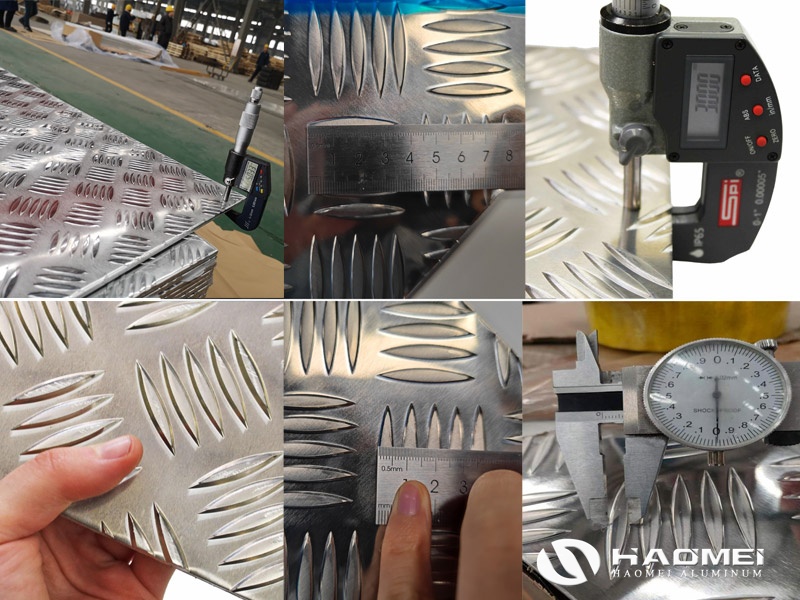
The primary advantage is low weight. A 1/8 in aluminum diamond plate 4x8 sheet weighs about 34.6 lb, while a steel sheet of comparable dimensions and thickness can weigh nearly three times as much. This difference reduces vehicle payload loss, eases manual installation, and lowers handling risk in workshops.
Aluminum tread plate also offers natural corrosion resistance. Unlike bare carbon steel, it does not require routine painting to resist normal moisture exposure. In coastal, food-service, chemical-adjacent, or outdoor applications, 5052 alloy is often the more durable choice. The material is non-magnetic, recyclable, weldable with appropriate procedures, and easy to cut, drill, bend, or rivet.
A bright mill finish gives a clean industrial look, while polished, painted, or black-coated finishes can support branded vehicle interiors, retail displays, and architectural designs. The right finish should be matched to the real service environment. Highly polished material looks impressive, but mill finish or coated tread plate can be more practical where scratches, mud, or regular abrasion are expected.
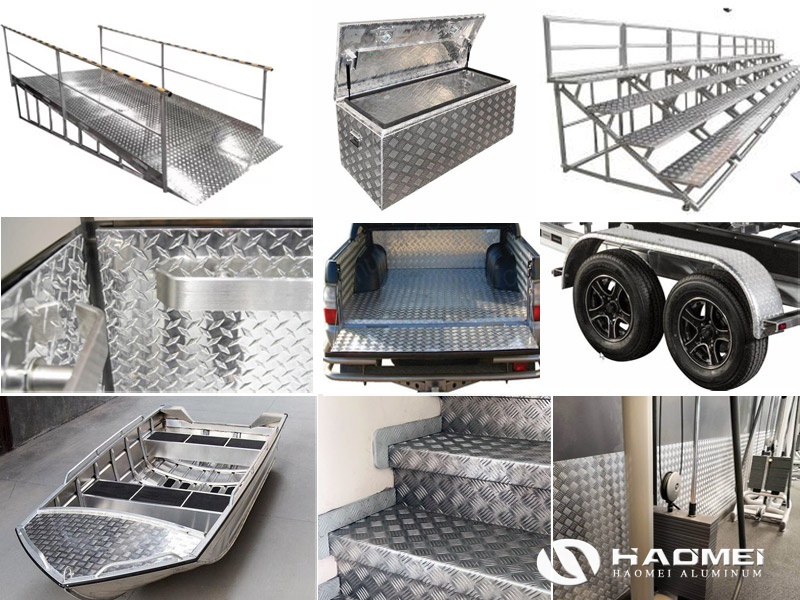
A 4x8 size is efficient for truck and trailer panels, garage wall protection, workbenches, stair treads, kick plates, machinery housings, utility boxes, and custom vehicle modifications. It is also widely used for marine walkways, loading platforms, RV interiors, warehouse safety surfaces, and decorative storefront panels.
For light-duty wall cladding or toolbox skins, 0.045 to 0.080 in may be sufficient. For walkable surfaces, 1/8 in is a common starting point when the sheet is fully supported. Heavier traffic, wider support spacing, rolling carts, or concentrated loads may require 3/16 in or 1/4 in material. The sheet thickness alone does not determine load capacity; support span, frame design, fastening pattern, and dynamic impact must also be considered.
For projects needing a broader range of finishes and thicknesses, our diamond plate aluminum sheet selection helps fabricators match material performance with project budgets. Choosing the correct specification at the beginning prevents unnecessary weight, excessive freight costs, and avoidable rework after installation.
Accurate weight data allows customers to plan container loading, lifting equipment, and installation crews with confidence. A well-made aluminum diamond plate 4x8 sheet combines controlled thickness, crisp tread embossing, reliable corrosion resistance, and stable flatness, delivering practical value from the fabrication shop to the finished installation.