China Embossed Aluminum Sheet Manufacturer
Feb-28-2026
When buyers search for a china embossed aluminum sheet manufacturer, they are usually balancing three things at the same time: stable alloy quality, consistent emboss depth (appearance and friction), and predictable cost that tracks the aluminum market rather than surprises them after confirmation. I have worked with embossed aluminum projects across insulation jacketing, HVAC coil protection, appliance panels, and transportation trims, and the best results always come from selecting the alloy and temper based on forming method, service environment, and surface expectations, not only on price per ton.
Below is a product-focused introduction to embossed aluminum sheet and coil, written from the perspective of what actually matters in processing and in end-use.
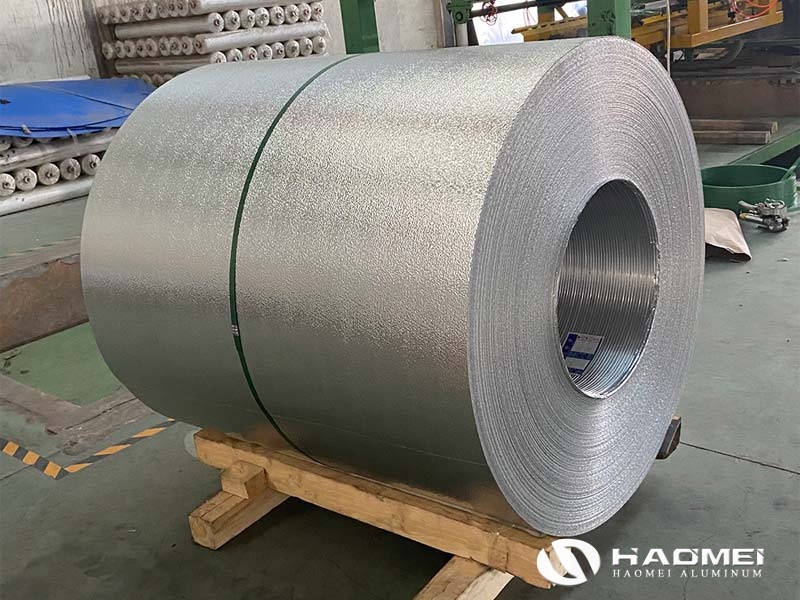
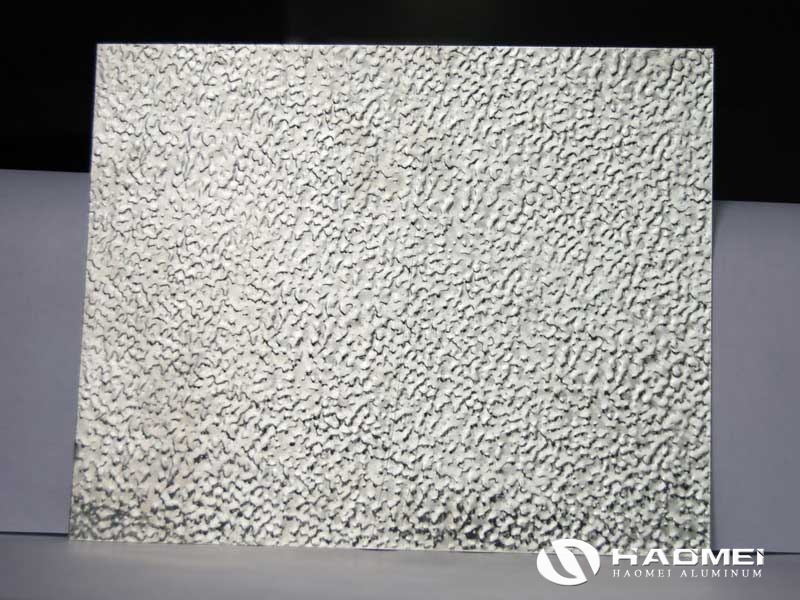
Embossed aluminum sheet (also supplied as coil) is aluminum that has been passed through patterned rolls to create a raised texture such as stucco (orange peel), diamond, 5-bar, water ripple, or custom patterns. The embossing adds:
Higher stiffness without a major weight increase
Improved slip resistance for flooring and platforms
Better dent and scratch hiding for appliance panels and casings
More surface area for bonding and certain thermal jacket systems
In real production terms, embossing quality is not only pattern clarity. It also includes roll stability, flatness after embossing, coil set control, and whether the pattern remains consistent after coating or lamination.
For most embossed aluminum sheet orders, the workhorse alloys are in the 1xxx, 3xxx, and 5xxx series. Each series has a different "personality" on the line.
| Alloy | Typical Use Cases | Why It Works Well | Notes from the shop floor |
|---|---|---|---|
| 1050/1060/1070 | Insulation jacketing, decorative panels, general purpose | High formability, excellent thermal conductivity, easy to emboss | Softer; needs careful handling to avoid edge damage in transport |
| 1100 | Appliance trim, light stamping, cladding | Stable forming behavior, good corrosion resistance | Good balance when you want "clean" surface appearance |
| 3003 | HVAC, insulation cladding, refrigeration back panels | Stronger than 1xxx, very good corrosion resistance | Often my default recommendation for jacketing and coil protection |
| 3004 | Can-related, deeper forming, coated products | Higher strength than 3003 | Useful when you need strength but still want good formability |
| 5052 | Marine humidity, truck bodies, tooling plates, flooring | Strong, excellent corrosion resistance | Embossing requires tighter process control; higher strength can show springback |
| 5754 | Vehicle panels, anti-slip applications | Good strength and corrosion resistance | Great for transport; typically chosen when fatigue and vibration matter |
If you are specifying material for insulation jacketing in coastal or chemical environments, I generally advise stepping up from 1xxx/3003 to 5052 embossed aluminum sheet when the budget allows, because it buys you longer appearance retention and fewer corrosion complaints around fasteners and overlaps.
Tempers determine hardness, formability, and how the embossed pattern behaves during fabrication.
| Temper | Characteristics | Recommended For |
|---|---|---|
| O (Annealed) | Softest, best for deep forming and tight bending | Complex forming, deep draw parts, tight radii |
| H14/H24 | Medium hardness, good rigidity, workable | Insulation jacketing, appliance panels, general fabrication |
| H18/H19 | Harder, maximum strength for non-formed parts | Anti-slip panels, covers, flat applications with minimal forming |
My practical rule: if the customer will do aggressive bending, hemming, or stamping, choose O temper embossed aluminum or H24; if the panel will be installed largely flat and needs rigidity, H14/H18 becomes attractive.
1xxx and 3xxx series perform very well in atmospheric exposure.
5xxx series excels in marine humidity and chloride-rich environments.
If your application is insulation jacketing outdoors, pay attention to galvanic corrosion at contact points (stainless bands, carbon steel brackets). Material selection helps, but installation design matters just as much.
Embossing increases apparent stiffness, but base alloy and temper still control dent resistance. For appliance shells and refrigerated truck liners, I prefer 3003-H14/H24 or 5052-H32 depending on forming.
A consistent pattern requires stable rolling and embossing pressure. For coated or laminated products, the emboss depth must be predictable so the coating does not "bridge" the valleys or thin out at the peaks.
For insulation systems, higher thermal conductivity (often 1xxx series) can be beneficial, but in most jacketing roles the aluminum is protective rather than the main heat transfer path. In practice, durability and corrosion resistance tend to dominate selection.
From an industry perspective, China's supply chain is strong in aluminum rolling capacity, surface processing, and cost-efficient conversion (slitting, embossing, coating, packaging). The real advantages come when the manufacturer controls the full route from coil sourcing to final inspection:
Wide alloy and gauge availability: easier to match a project spec without long lead times
Pattern options and roll management: common stucco patterns plus custom options
Processing services: slitting, cut-to-length, protective film, paper interleaving
Scalable supply: practical for both trial orders and contract volumes
Pricing is also closely linked to LME aluminum, regional premiums, and conversion costs (rolling/embossing/finishing). When a supplier explains this clearly and locks a transparent pricing formula, it usually signals a mature operation.
Pipes, tanks, vessels, ducts
Stucco embossed aluminum reduces visible handling marks and adds stiffness
Typical alloys: 1060, 1100, 3003; higher-end: 5052
Coil protection covers
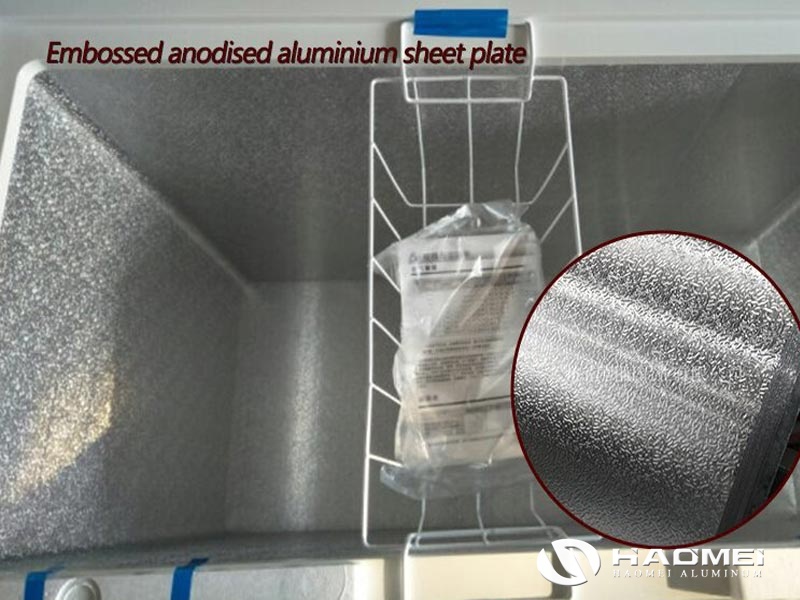
Refrigerator and cold-room panels
Pattern helps hide scratches and improves panel rigidity
Truck steps, platforms, ramps
Preferred alloys: 5052/5754 in harder tempers where forming is limited
Wall protection, interior panels, ceilings
Frequently paired with PVDF/PE coating for color and weathering
To get the fastest quotation and the most accurate production result, specify:
Alloy and temper (example: 3003-H14)
Thickness, width, and length (or coil ID/OD and coil weight range)
Emboss pattern (stucco, diamond, 5-bar, custom) and emboss direction if relevant
Surface finish (mill finish, anodized, coated, film-protected)
Application and forming steps (bending radius, stamping, outdoor exposure)
Packaging requirements (export seaworthy pallet, corner protection, moisture barrier)
If you are comparing suppliers, ask whether they can provide a material test certificate (MTC), emboss roll life control records, and coating thickness verification when applicable. Those details separate a "trader quote" from a manufacturing-grade supply promise.
If you share your target application (insulation jacketing, appliance panels, flooring, or decorative cladding), I can recommend the most cost-effective alloy-temper combination and the emboss pattern that holds up best in real installation conditions.