Stucco Embossed Aluminium Coil
Apr-01-2026
Stucco embossed aluminium coil is one of those materials that looks simple on the surface, yet solves multiple engineering and production problems at once. By pressing a controlled "orange peel" or pebble-like pattern into an aluminium strip, we get a coil with higher surface durability, better scratch hiding, improved stiffness-to-weight behavior, and a professional industrial appearance that stays consistent in mass production. In export projects, that combination matters: it reduces handling complaints, improves finished-product yield, and helps end users keep equipment looking clean over time.
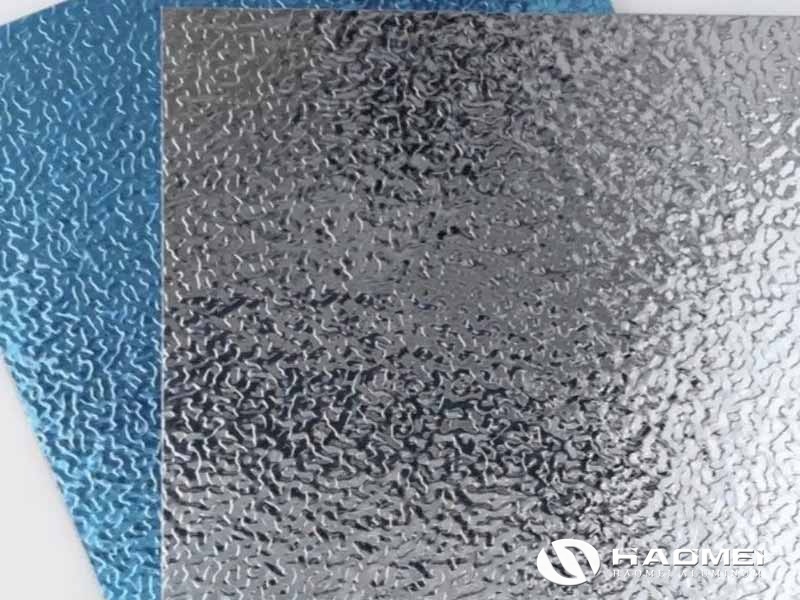
Stucco embossing is a continuous rolling process. After the base aluminium strip is rolled to gauge and heat-treated to the required temper, the strip passes through embossing rolls where the pattern is formed. Depending on the order, the coil may then be degreased, chemically pretreated, coated (if color-coated is required), and finally slit and packed.
From a technician's perspective, the key point is repeatability: stable rolling force, consistent entry tension, and clean roll surfaces are what keep the emboss depth uniform coil-to-coil. That uniformity is not only cosmetic. It influences bend consistency, contact area for adhesives/foams, and the way light reflects on large panels.
Below are the specifications most commonly requested for stucco embossed aluminium coil in HVAC, insulation jacketing, appliance, and cladding supply chains.
1xxx series (e.g., 1050, 1060, 1100): high formability and thermal conductivity. Popular for insulation jacketing and general covers.
3xxx series (e.g., 3003, 3105): excellent balance of strength and formability, widely used for cladding and general fabrication.
5xxx series (e.g., 5052): higher strength and better corrosion resistance in harsher environments, often selected for demanding outdoor use.
O (annealed): best for deep forming and tight radii.
H14/H24: common for jacketing and cladding where moderate stiffness is needed.
H16/H18: used when customers want more rigidity and dent resistance.
Typical export ranges depend on the end use:
Thickness: commonly 0.2 to 1.2 mm (many jacketing orders fall around 0.3 to 0.8 mm).
Width: commonly 20 to 1250 mm after slitting.
Inner diameter (ID): 300 mm / 405 mm / 508 mm are frequent standards.
"Stucco" usually refers to orange peel or pebbled textures. Depth and pitch affect appearance and stiffness. In practice, deeper emboss improves scratch masking and rigidity but may slightly increase forming force and influence coating appearance (if painted).
Mill finish stucco embossed coil: economical, industrial look, common for insulation jacketing and internal components.
Prepainted (PVDF/PE) stucco embossed coil: improved UV resistance and color stability for architectural or branded appliance uses.
Film-laminated options: added protection during fabrication and transport.
If a customer needs ready-to-fabricate stock for building envelopes, Stucco Embossed Aluminium Cladding is often the most direct product match because the coating system, gloss, and weathering requirements are usually defined from the start.
The embossed topography disperses contact points during handling. In warehouses and on job sites, the material inevitably rubs against pallets, straps, tooling, and gloves. Stucco texture hides micro-scratches far better than flat sheet, which translates into fewer claims and less rework.
Embossing adds geometric stiffness. For many projects, that allows customers to keep the same gauge while achieving a more solid feel, or reduce gauge while maintaining functional rigidity. This is one of the most cost-effective ways to optimize weight vs. performance.
For insulation systems, the surface must tolerate rolling, bending, banding, and outdoor exposure. Stucco emboss helps resist "oil canning" appearance on large wraps and provides a stable look even after installation. When customers specify jacketing explicitly, Stucco Embossed Aluminum Jacketing is typically the right route because it aligns temper, width, and packaging to job-site practices.
Aluminium already performs well in many environments, and alloy selection boosts that further. For coastal or chemical-adjacent sites, pairing 5xxx series with the right pretreatment/coating system is usually the most robust solution.
In export supply, "same pattern, same gloss, same feel" is a quality benchmark. Stable emboss roll maintenance and coating control reduce lot-to-lot variation, which is critical for appliance panels and architectural trim.
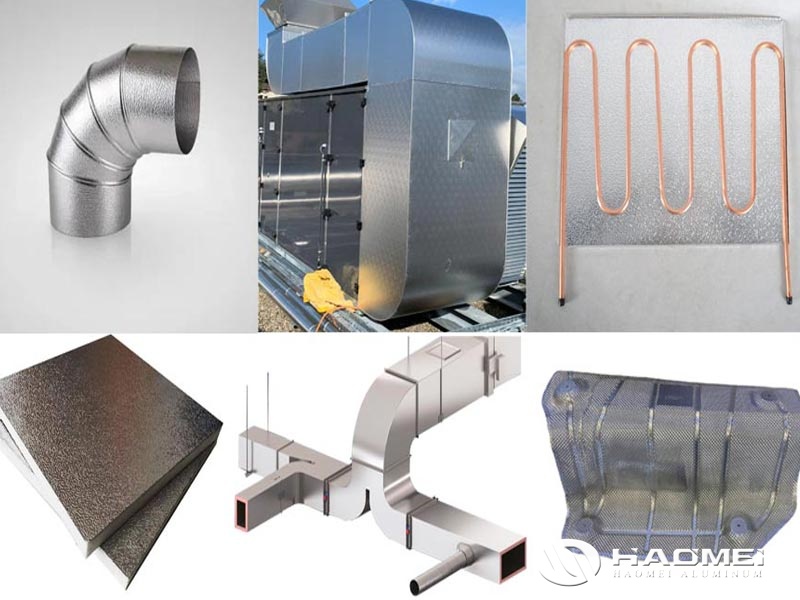
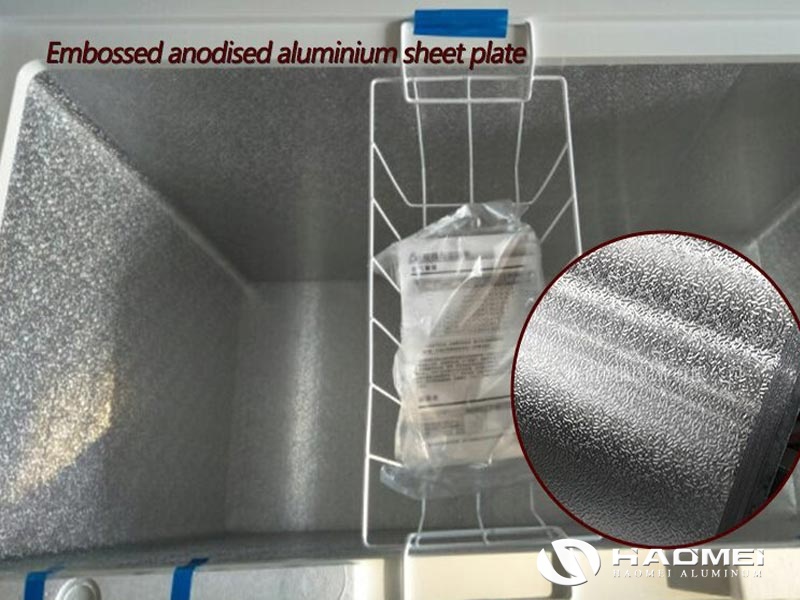
Evaporator covers, back panels, insulation liners, and protective wraps benefit from embossing because the texture resists handling marks and gives a clean industrial finish.
This is one of the strongest fits. Installers want a coil that is easy to roll-form, not overly sensitive to minor scratches, and stiff enough to protect insulation. Correct temper selection (often H14/H24) is what keeps fabrication smooth.
For façades, soffits, equipment housings, and protective screens, embossed coil offers a premium look while staying practical for transportation and installation. When color coated, it also supports branding and architectural color matching.
Toolboxes, covers, trims, and lightweight protective skins are typical. The embossed pattern helps maintain visual consistency across parts assembled from different batches.
From our day-to-day coil processing experience, most quality problems are not caused by "aluminium" in general, but by small control points:
Emboss roll cleanliness and wear control determine pattern sharpness and uniformity.
Tension stability prevents stretch marks and uneven texture.
Slitting burr control protects downstream forming dies and improves safety.
Packaging discipline (edge protection, moisture barriers, correct coil eye orientation) prevents transit damage and oxidation, especially on long sea shipments.
That is why professional export-grade stucco embossed aluminium coil is not only about meeting a thickness and alloy on paper. It is about delivering coils that unwind smoothly, form predictably, and arrive with the surface quality customers expect.
If appearance and weathering are priorities: choose a suitable alloy (often 3xxx/5xxx) plus a defined coating system (PE/PVDF).
If forming is tight and complex: choose softer temper (O or H24) and confirm emboss depth.
If the job site is rough and fast-paced: prioritize emboss definition, protective film, and packaging.
If cost is the driver: mill finish 1xxx/3xxx with practical temper often achieves the best value.
For buyers who want a purpose-built material for roll forming, insulation protection, or appliance skins, stucco embossed aluminium coil remains one of the most efficient ways to get durable surface performance, stable fabrication behavior, and a finish that stays presentable throughout shipping, processing, and real-world use.