Aluminum Diamond Plate 1 4 Thick
Nov-17-2026
Aluminum diamond plate 1/4 thick is a robust tread-pattern sheet designed for applications that need a combination of durability, low weight, corrosion resistance, and safer footing. Also called aluminum checker plate or tread plate, it has raised diamond projections rolled into one face. These projections improve traction while giving equipment, vehicles, platforms, and architectural installations a clean industrial appearance.
For export projects, 1/4 inch material is often selected when thinner decorative sheet is no longer sufficient, but customers still want to avoid the weight and corrosion issues associated with steel. In production practice, this thickness is especially popular for truck bodies, trailer components, marine walkways, loading areas, protective panels, and machinery enclosures.
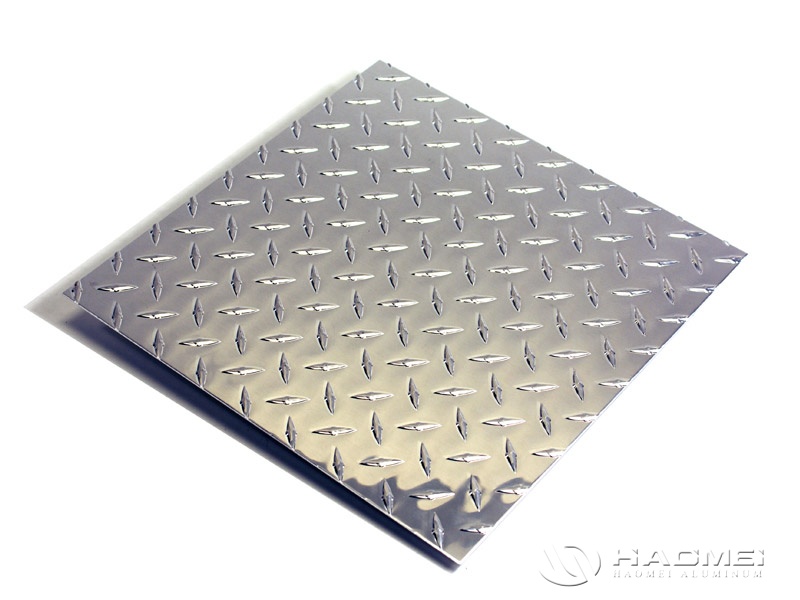
A nominal 1/4 inch aluminum diamond plate has a base thickness of approximately 0.250 inch, or 6.35 mm. One important technical point is that buyers should distinguish between base thickness and overall thickness. The raised tread pattern adds height above the base metal, so the total height measured across the diamonds will be greater than 0.250 inch. For fabrication, fitting, and load calculations, the base thickness should be clearly confirmed in the purchase specification.
Common specifications include:
Nominal base thickness: 1/4 inch, 6.35 mm
Common alloys: 3003-H22/H24 and 5052-H32
Surface options: Mill finish, polished finish, painted, anodized, or coated finish
Typical sheet sizes: 48 x 96 inches, 48 x 120 inches, 60 x 120 inches, and custom cut sizes
Pattern: Usually five-bar or diamond tread, depending on regional standards and customer requirements
Standards: ASTM B209 or equivalent material and dimensional requirements when specified
For customers needing standard truck-body or platform dimensions, a 4x8 aluminum diamond plate format is a practical option because it reduces cutting loss and simplifies handling during fabrication.
Alloy choice affects performance more than many buyers initially expect. 3003 aluminum diamond plate is widely used for general-purpose flooring, wall protection, toolboxes, and decorative applications. It offers good formability, good corrosion resistance, and a favorable cost-performance ratio.
5052 aluminum diamond plate has higher strength and significantly better resistance to saltwater and marine atmospheres. From an export technician's viewpoint, 5052-H32 is usually the more reliable recommendation for boat decks, docks, offshore-related equipment, coastal trailers, and areas exposed to deicing salts or frequent moisture. It costs more than 3003, but the improved service life can justify the investment in severe environments.
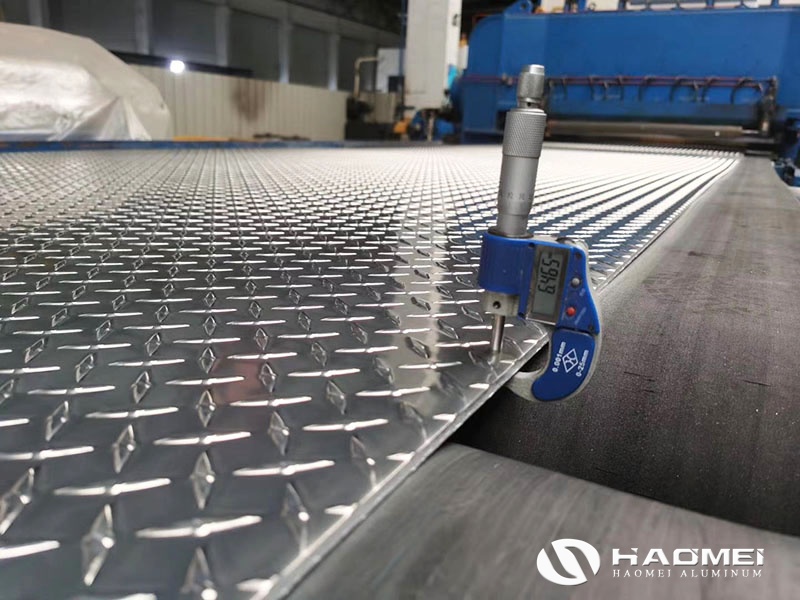
The first advantage of 1/4 inch aluminum diamond plate is its excellent strength-to-weight ratio. Aluminum is much lighter than carbon steel, helping reduce vehicle payload weight and easing installation on elevated structures. This can be valuable for trailer manufacturers and transport equipment builders trying to improve fuel efficiency or maximize allowable cargo capacity.
The raised tread pattern delivers enhanced slip resistance. It is not a substitute for proper drainage, cleaning, or safety procedures, but it provides useful grip in areas where footwear, tools, or wheels may encounter water, oil, mud, or dust. Pattern orientation should be considered during installation so that water can drain effectively rather than collect along seams.
Corrosion resistance is another major benefit. Aluminum naturally forms a protective oxide layer, making it suitable for outdoor exposure and humid working conditions. Proper alloy selection, edge treatment, compatible fasteners, and isolation from dissimilar metals are still essential. In particular, direct contact with untreated steel can create galvanic corrosion when moisture is present.
This material also fabricates well with suitable equipment. It can be cut by CNC router, waterjet, laser, plasma, or saw, while drilling and fastening are straightforward. Because 1/4 inch tread plate is substantial material, tight bends should be planned carefully with appropriate bend radius, tooling, and grain-direction awareness to avoid cracking or pattern distortion.
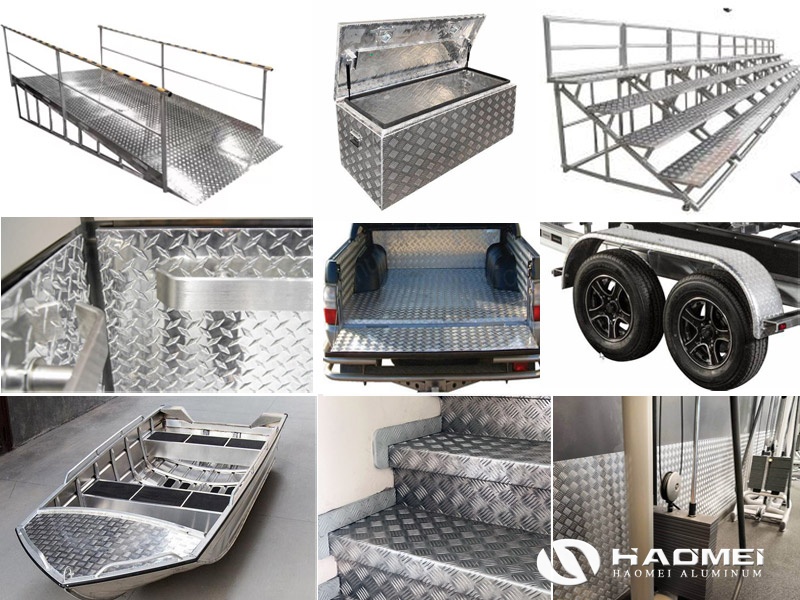
A 1/4 aluminum diamond plate is widely used where service conditions are demanding and a lightweight metal surface is preferred. Typical applications include:
Trailer floors, ramps, steps, and stone guards
Truck beds, service vehicle interiors, and wheel well protection
Industrial platforms, access steps, machine guards, and maintenance walkways
Marine decks, gangways, storage compartments, and dock components
Warehouse carts, equipment enclosures, and workbench surfaces
Architectural wall panels, elevator protection, and high-traffic interior finishes
For heavy foot traffic, it is important to evaluate the full installation system rather than selecting sheet thickness alone. Span distance, support spacing, concentrated loads, fastening method, vibration, and deflection limits all influence performance. A 1/4 inch plate may be highly effective over close support members but unsuitable for a long unsupported span under forklift or vehicle loads.
Reliable aluminum diamond plate should have a consistent tread pattern, uniform base thickness, clean edges, and a surface free from deep dents, severe roller marks, oil contamination, or oxidation staining. For export shipments, protective film, moisture-resistant packaging, corner protection, and secure palletization are important because appearance damage can occur during long-distance handling even when the metal itself remains structurally sound.
Before ordering, confirm the alloy, temper, base thickness, sheet dimensions, pattern direction, finish, tolerance requirements, and final application. These details help ensure the aluminum diamond plate performs as intended from fabrication through long-term service.