Embossed Aluminum Coil Price
Apr-17-2026
When buyers search for embossed aluminum coil price, they are usually asking two questions at the same time: what does the material cost today, and what value does it deliver in actual use? In my experience in the aluminum market, price alone never tells the full story. The right embossed coil can reduce processing loss, improve product appearance, increase corrosion resistance, and make downstream forming more efficient. That is why serious buyers compare alloy, temper, thickness, pattern depth, surface finish, and application before judging whether a quotation is truly competitive.
Our embossed aluminum coil products are designed for customers who need stable performance, consistent pattern quality, and reliable supply. We produce coils for insulation jacketing, refrigeration panels, decorative surfaces, transportation, appliances, and general industrial fabrication. For buyers evaluating the market, understanding the relationship between technical specifications and price is the smartest way to control total procurement cost.
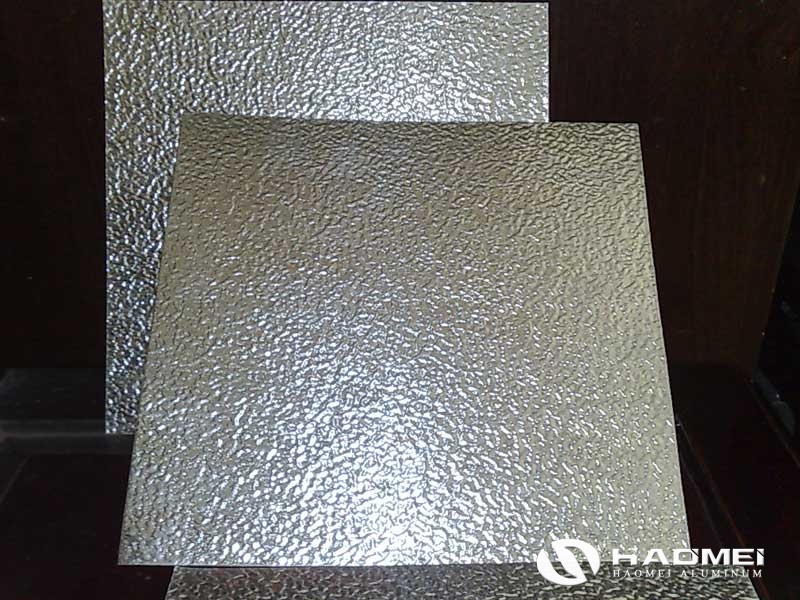
From a market perspective, embossed aluminum coil price is mainly influenced by the following factors:
Aluminum ingot price: This is the base cost and usually follows LME or regional aluminum benchmarks.
Alloy series: 1xxx, 3xxx, 5xxx, and 8xxx grades differ in chemical composition and cost structure.
Temper condition: O, H14, H16, H18, H22, H24, and similar tempers affect mechanical properties and processing cost.
Thickness and width: Thinner gauges require tighter rolling control, while wider coils may increase production difficulty.
Embossing pattern: Stucco, orange peel, diamond, pebbled, and customized patterns have different tooling and processing requirements.
Surface treatment: Mill finish, anodized, coated, or color-painted finishes change both cost and service life.
Order quantity and packaging: Larger, regular orders usually receive better unit pricing.
Export standards: Protective film, eye-to-wall packaging, seaworthy pallets, and strict tolerance control add value and cost.
In practical purchasing, many customers focus too much on the lowest quote. I have seen low-priced material lead to shallow embossing, uneven temper, poor flatness, and edge cracking during forming. Those hidden costs quickly erase the apparent savings.
We supply embossed aluminum coil in several common alloy families, each suited to different applications.
| Alloy | Typical Characteristics | Common Uses |
|---|---|---|
| 1050 | High purity, excellent corrosion resistance, good formability | Insulation, decorative panels, appliances |
| 1060 | Similar to 1050 with strong thermal conductivity | Refrigerator panels, heat-related applications |
| 1070 | Very high aluminum content, excellent conductivity | Special industrial use |
| 1100 | Good workability and corrosion resistance | General decoration, cladding |
| 3003 | Mn-added alloy, better strength than 1xxx | Roofing, insulation jacketing, trailers |
| 3004 | Higher strength than 3003 | Building panels, more demanding formed parts |
| 3105 | Good corrosion resistance and paintability | Decorative and coated products |
| 5052 | Mg-added alloy, stronger and more corrosion resistant | Marine-adjacent use, transport, premium applications |
| 8011 | Widely used in insulation and packaging-related industrial sectors | Pipe jacketing, appliance and industrial use |
For most standard projects, 1050, 1060, 3003, and 8011 are the most price-efficient choices. If the application requires a better strength-to-weight ratio or stronger corrosion resistance, 5052 is often worth the premium.
Customers looking for patterned products often compare coil and sheet options. In those cases, our Embossed Aluminum Coil range is ideal for continuous processing, while formed sheet products are better for cut-to-size fabrication.
Temper selection directly affects processing behavior, rigidity, and finished appearance.
| Temper | Features | Recommended Use |
|---|---|---|
| O | Soft, highly formable | Deep drawing, flexible forming |
| H14 | Half-hard, balanced strength and ductility | General embossing and fabrication |
| H16 | Harder than H14 | Applications needing higher rigidity |
| H18 | Full hard, higher strength, lower formability | Flat decorative or protective uses |
| H24 | Strain hardened and partially annealed | A practical choice for forming with stability |
In my view, H14 and H24 are among the most practical tempers for embossed aluminum coil. They offer a good balance between pattern retention and fabrication performance. Buyers using roll forming or light bending equipment often prefer these tempers because they reduce the risk of surface distortion.
Professional buyers usually evaluate embossed aluminum coil through a combination of visual, mechanical, and application-based properties.
Aluminum naturally forms a protective oxide layer. This is one of the biggest reasons embossed coil performs well in humid, industrial, and outdoor environments.
Compared with steel, aluminum offers significant weight savings. For transportation, cladding, appliance panels, and insulation systems, this translates into easier handling and lower structural load.
Embossed patterns improve visual appeal and help hide scratches, oil marks, and small handling defects. This is especially valuable in visible architectural and appliance applications.
Some patterns, such as diamond and pebbled finishes, can improve grip and functionality. Others, like stucco or orange peel, are chosen for appearance and anti-scratch performance.
Well-made embossed aluminum coil should slit cleanly, form consistently, and maintain pattern integrity during downstream processing.
In insulation jacketing and refrigeration systems, aluminum's thermal conductivity and weather resistance are major commercial advantages.
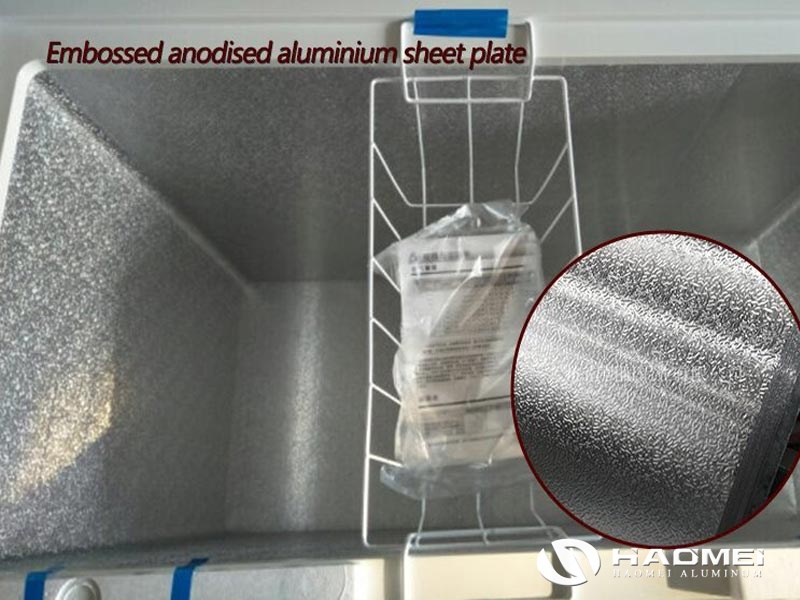
Based on years of market observation, customers return to a supplier for consistency more than anything else. Our embossed aluminum coil is valued for several practical advantages:
Stable alloy chemistry for predictable fabrication results
Uniform embossing depth for a premium and consistent surface
Accurate thickness tolerance to reduce downstream adjustment
Clean surface quality with optional protective film
Good flatness and coil winding for automated production lines
Flexible customization in width, thickness, temper, and pattern
Reliable export packaging for long-distance shipment
For insulation and exterior protection markets, many customers also ask for stucco finishes. Our Stucco Embossed Aluminum Coil is a popular choice because it combines attractive texture with excellent durability in jacketing and cladding systems.
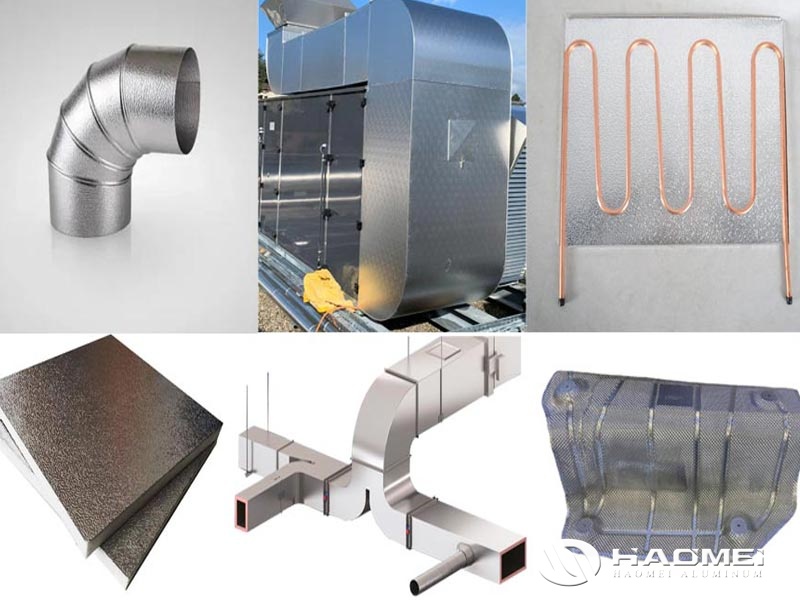
Embossed aluminum coil serves a wide range of industries, and the exact alloy-temper combination should be chosen according to end use.
Refrigerator liners, freezers, heat exchange-related covers, and appliance casings often use 1050, 1060, or 3003 embossed coil because these alloys combine formability, corrosion resistance, and a clean decorative effect.
Pipe insulation, tank insulation, and equipment cladding frequently use 1060, 3003, or 8011. Here, buyers care about weather resistance, easy installation, and long service life.
Wall panels, ceiling systems, interior trims, and decorative facades use embossed aluminum for both style and durability. Color-coated options are especially popular in this segment.
Trailers, vehicle panels, and interior transport components may use stronger alloys such as 3003 or 5052 where extra durability is needed.
Embossed surfaces are used where improved appearance, reduced glare, or better handling are required.
When comparing embossed aluminum coil price from different suppliers, I recommend buyers review these points carefully:
Confirm the exact alloy and temper
Check pattern type and embossing depth
Verify thickness tolerance and width tolerance
Ask whether the price includes film, packaging, and export protection
Review MOQ, delivery schedule, and coil ID/OD requirements
Request application-based recommendations, not just a generic quote
A professional supplier should be able to explain why 1060 is better than 1050 for one project, or why 3003 H24 may outperform 1100 O temper in another. That technical guidance often saves more money than negotiating a few dollars off the ton price.
In volatile aluminum markets, embossed aluminum coil price can change quickly with raw material movement, freight fluctuations, and production scheduling. My personal advice is simple: if your specification is fixed and your project timeline is clear, it is often better to lock in the right material early rather than wait for a perfect price that may never arrive. Good material, delivered on time and with stable quality, usually creates more value than chasing the lowest number on paper.
For buyers who want dependable embossed aluminum coil for refrigeration, insulation, decoration, or industrial fabrication, the best purchasing strategy is to balance market timing with product suitability. Once alloy, temper, and application are matched correctly, the price becomes much easier to evaluate on a true cost-performance basis.